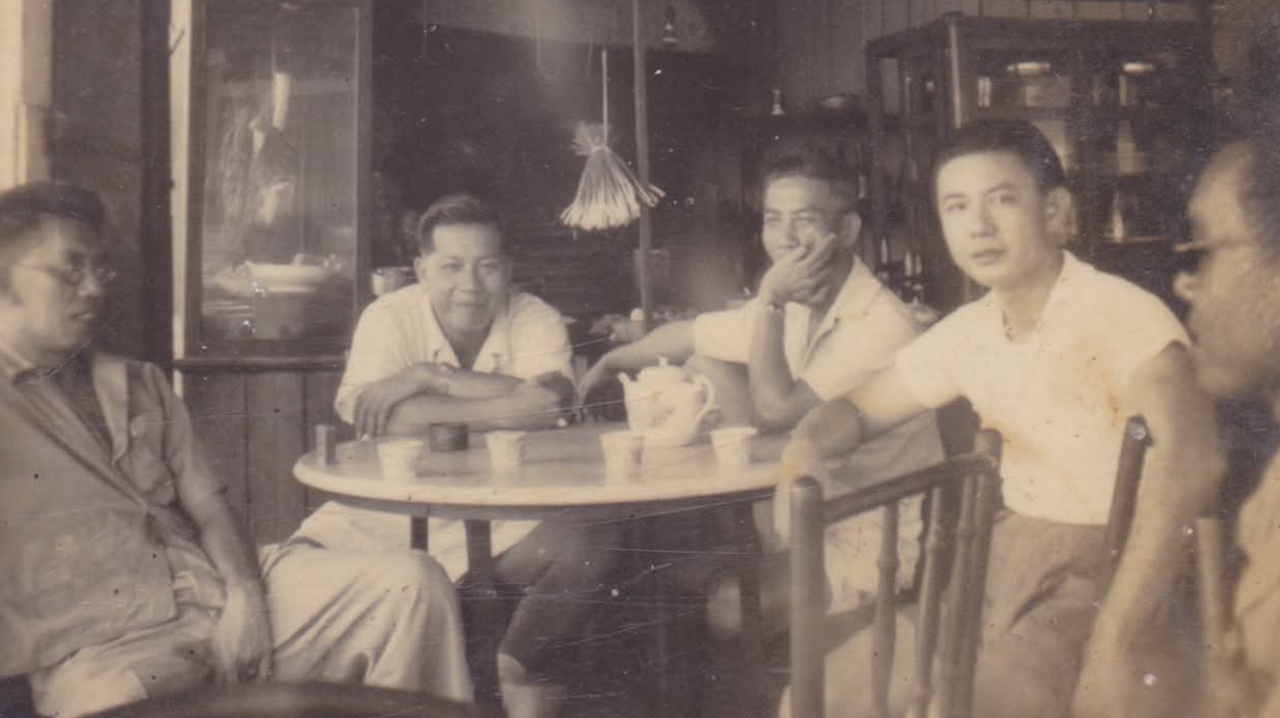
In Songkhla’s old town, the day often begins with the fresh scent of tea and the lively hum of conversation. Tea shops open as the first light reaches the streets, welcoming neighbours who come to catch up, exchange news and set the world to rights over a cup.
Songkhla’s tea habit grew out of trade, the arrival of Chinese migrants and influences from nearby lands. That reddish-brown cup holds more than a drink: it tells a story of people and cultures meeting. Set midway along the Malay Peninsula, Songkhla offered ships a natural place to shelter from the monsoon and trade. Merchants from East and West passed through, bringing customs that mingled here over centuries. Tea became part of everyday life, a gesture of welcome shared across communities.
To follow the story of tea further back, we must travel more than two thousand years to China. There, tea gained favour among Buddhist practitioners as a way to stay alert during meditation. It grew into a much-loved drink and a valuable commodity during the Tang dynasty. In time, trading ships carried it across the seas to the West, where the tea trade became bound up with Britain’s imperial and industrial expansion. Across Southeast Asia, tea also helped bring trading communities into closer contact.
By the seventeenth and eighteenth centuries, tea drinking had spread into Siam. Chinese tea was served to visitors, and foreign accounts describe hosts offering guests tea and cigarettes. By the twentieth century, collecting teapots had become a pastime. Tea and coffee shops were also opening in Chinese communities, giving people places to gather and talk.
In the south, the winds of trade brought Chinese tea traditions into contact with another favourite: tea sweetened with milk and sugar, widely enjoyed in neighbouring Malaysia under British colonial rule. Songkhla had its own customs of greeting visitors with tea. In his account of an inspection journey to the Malay Peninsula in R.S. 121, Prince Narisara Nuwattiwong describes a tea reception. Records also mention a tea pavilion near the Laem Sai royal residence, built for King Mongkut’s visit to Songkhla in 1859.
By the twentieth century, Chinese-run kopitiam—traditional tea and coffee shops—had appeared throughout Songkhla’s old town. They imported substantial quantities of tea leaves from Sri Lanka and Indonesia. These shops became places where people of all ages and backgrounds could sit, talk and spend time together. That everyday ritual remains one of the south’s most distinctive traditions: a little of Songkhla’s long history, served in a cup.
By Theeranat Meenun