One Sea Bass How Many Dishes Does a Chef See

A conversation with Chef Tok, Perat Anantapan, owner of Secret Garden Songkhla and president of the Songkhla Creative culinary Association, about making the most of ingredients, reducing kitchen waste, and why the value of good food should not end when the meal is over.

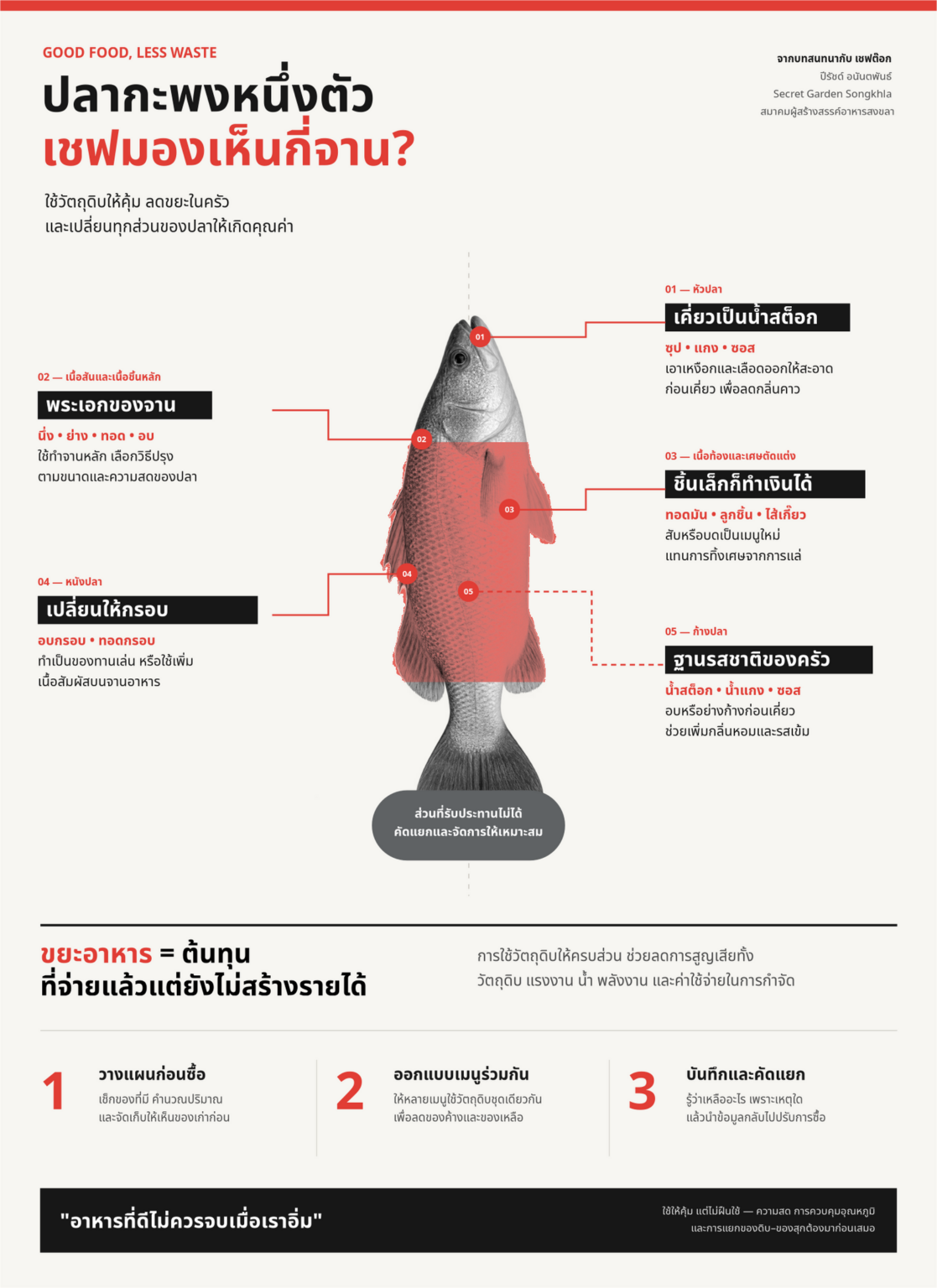
Place a whole sea bass on the table and most people may see one main course. A chef, however, may see several dishes in the same fish. The center fillet can be steamed, grilled, or fried. Trimmings can become fish cakes, the skin can be fried until crisp, and the head and bones can make stock for curries, soups, and sauces. This is about more than a chef’s skill. It means recognizing the value of an ingredient beyond its finest-looking part. For Chef Tok, Peerach Anantaphan, the conversation about reducing food waste should go beyond the term Zero Waste. Whenever an ingredient is discarded, the money, time, labor, and natural resources invested in it are lost as well.

Discarded food costs more than the ingredient itself

What does making full use of ingredients mean to Chef Tok? “A dish is more than its flavor. Behind it are farmers, fishers, transport workers, vendors, and cooks. When we throw food away, we lose more than fish, vegetables, or rice. We also waste the water, energy, time, and labor used throughout its journey. This is especially close to home in Songkhla, where our ingredients come from the sea, the lake, agricultural areas, and community markets. Using ingredients fully is therefore a way of respecting both nature and the people who produce our food.”

Traditional wisdom that predates the term Zero Waste

Is this a new idea? “Not entirely. Earlier generations knew how to dry, ferment, pickle, simmer, and preserve seasonal ingredients. They understood that every ingredient has its time. When something was abundant in one season, they found ways to preserve it for days when it was scarce. They may not have used the terms Zero Waste or circular economy, but they knew how to work with ingredients and make the fullest use of them. Good Food, Less Waste brings that traditional wisdom into today’s homes, restaurants, and cities.”

A whole sea bass should be more than its finest fillet

“Sea bass is an important ingredient in Songkhla, and it clearly demonstrates how fully an ingredient can be used. When a restaurant buys a whole fish, we should not think only about what to do with the center fillet. We should plan from the beginning where every part will go. The main fillet becomes the principal dish. The belly and trimmings can become fish cakes, dumpling filling, or fish balls. The skin can be fried until crisp, while the head and bones can be used for stock. One fish can therefore become more than one dish. A chef’s creativity is not measured only by how a plate looks, but also by the ability to make overlooked parts valuable and delicious enough that customers want to eat them.”

Use ingredients fully but put safety first

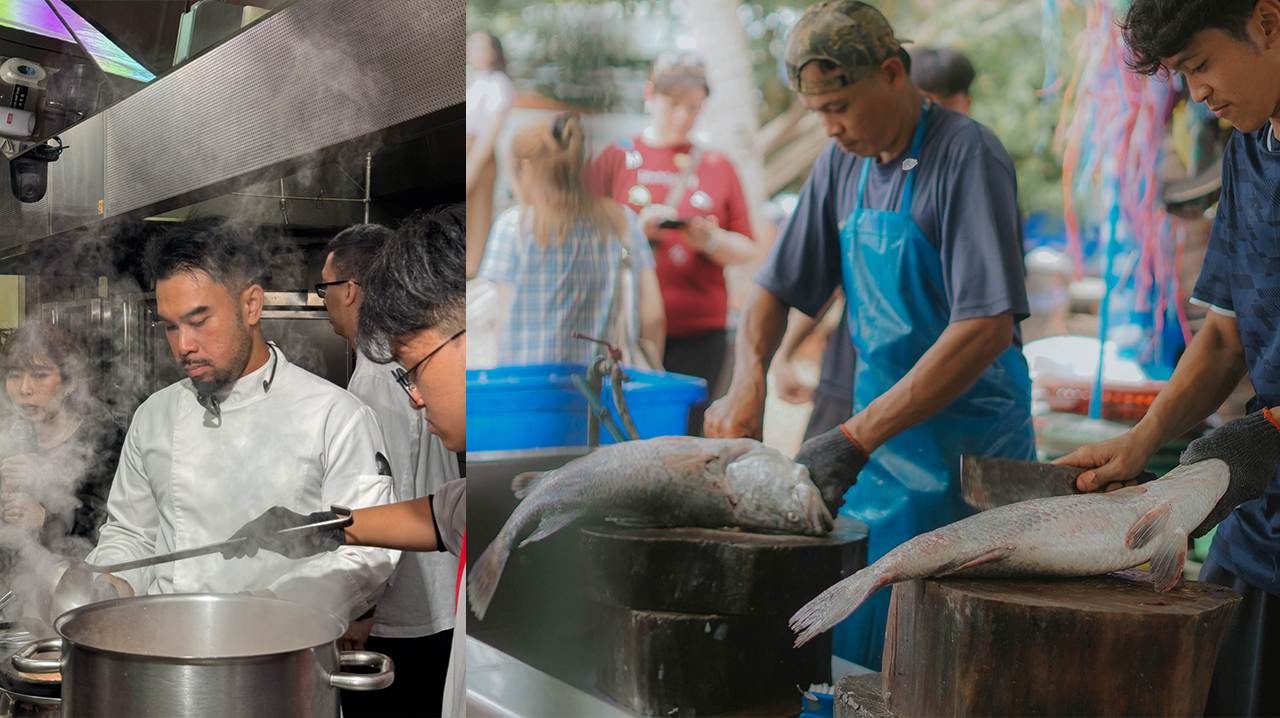
Does reducing waste mean using every part as food? “No. There is no need to force it, and we should not. Making full use of ingredients does not mean reusing anything that has deteriorated. Safety must always come first. Ingredients must be fresh and stored at the correct temperature. Equipment for raw and cooked food must be kept clearly separate. Inedible parts must be sorted and handled appropriately. The goal is not to empty the bin by forcing everything into use. It is to reduce what should never have been discarded and manage unavoidable waste as well as possible.”

Food waste is a restaurant cost

For a restaurant, is this more about the environment or the business? “It concerns both, and they are difficult to separate. Anything a restaurant throws away is money already spent that has produced no revenue. If the restaurant buys too much, prepares too much, or serves portions customers cannot finish, the cost is lost at that point. Restaurants should record customer numbers, sales, ingredient quantities, and leftovers each day. These records show how much to order and where most waste occurs. Designing several dishes around shared ingredients, offering different portion sizes, and allowing customers to request less rice or omit something they will not eat can all reduce both waste and cost. Reducing waste should not be a special activity once a year. It should be part of the restaurant’s daily management system.”

Start at home with the next meal

How can people begin? “Start by checking what you already have before shopping. Plan meals, buy only what you will eat, and keep ingredients that need to be used first where they are easy to see. If leftovers are still safe to eat, do not dismiss them as old food. Think about how they could become a new dish. Leftover rice can become fried rice, vegetables can go into soup, and cooked meat can be turned into another meal. Finally, separate food scraps from general waste. This may seem like a small step for one household, but the result will not be small if many kitchens do it together.”

A food city must care about more than taste

As president of the Songkhla Food Creators Association, how would you like the city to move forward on this issue? “Reducing food waste cannot be left to chefs and restaurants alone. It requires households, markets, communities, producers, restaurants, and local authorities to take part. Songkhla has exceptional food assets: resources from the sea and lake, agricultural areas, local knowledge, and cultural diversity. But becoming a food city should involve more than telling people what delicious food we have. We must be able to explain how we will care for our ingredients, enable producers to sustain their livelihoods, and reduce losses along the way. The creativity of a food city should not be measured only by the number of new dishes it produces. It also lies in the city’s ability to preserve the value of its food resources for as long as possible.”

The value of good food should not end when we are full

One sea bass can become several dishes. Food scraps can become compost. A few weeks of waste records can help a restaurant reduce costs throughout the year. It begins by changing the question from “Which parts can we use?” to “How can this ingredient create the greatest possible value?” Chef Tok concludes “Good food should do more than fill us for one meal. It should create value for producers, cooks, businesses, communities, and the environment at the same time. A sustainable food city may not need to begin with a large project. It may begin with one sea bass used to its fullest potential in our own kitchen.”

Leave a Comment