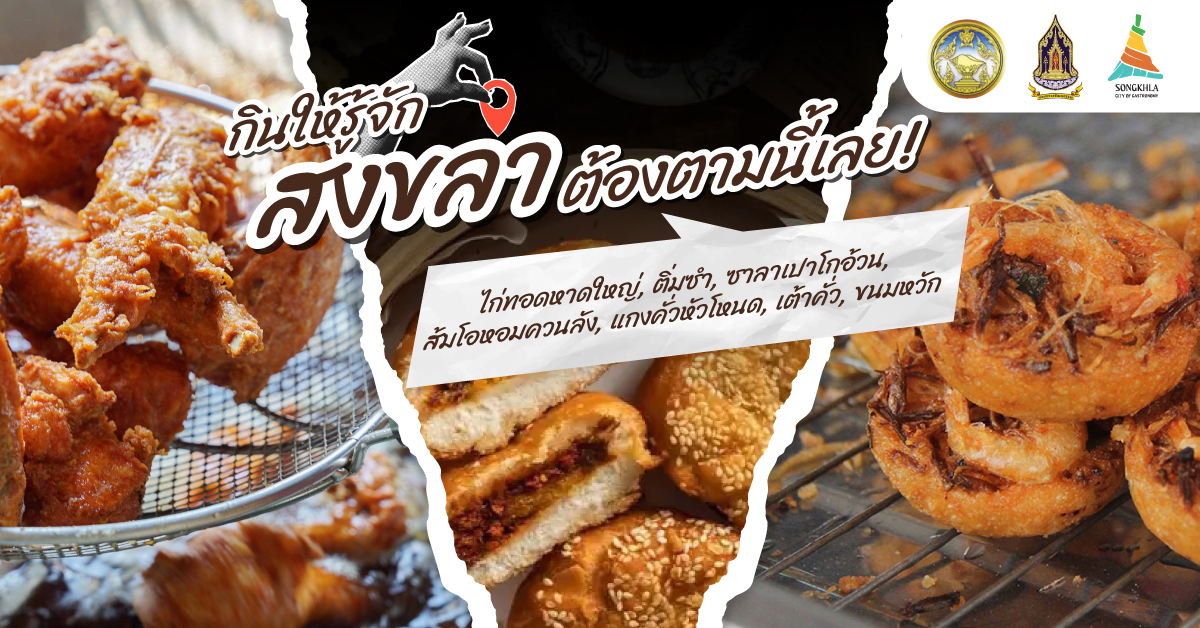
A journey to Songkhla may begin with its beaches, historic old town, or the scenic views of Songkhla Lake. Yet for many travelers, the most memorable part of the experience is often a single dish enjoyed along the way.
It could be a plate of freshly fried Hat Yai chicken for breakfast, dim sum from a bustling local eatery, a comforting serving of Hainanese chicken rice during a road trip, or regional fruits such as fragrant Khuan Lang pomelo and locally grown durian that capture the authentic taste of the land.
Looking at Songkhla’s food tourism landscape, one quickly realizes that culinary attractions are not concentrated in a single city. They are spread across districts such as Sadao, Hat Yai, Rattaphum, Na Mom, Na Thawi, Khlong Hoi Khong, and Thepha. Each area offers its own specialties, and every dish serves a purpose beyond satisfying hunger. These foods become part of the travel experience, reflections of local communities, and gateways to understanding Songkhla on a deeper level.
What Does Food Tourism Mean in the Context of Songkhla?
Food tourism is not simply about dishes created for visitors. It refers to foods that create a sense of place—foods travelers actively seek out, purchase as souvenirs, and recommend to others after their journey.
In Songkhla, food tourism is especially fascinating because it emerges from a combination of economic centers, border towns, agricultural communities, lakeside settlements, and rural districts rich in local ingredients.
Iconic dishes and products such as:
- Hat Yai fried chicken
- Dim sum
- Ko Aoun steamed buns
- Red roasted pork and crispy pork rice
- Hainanese chicken rice
- Food truck cuisine
- Local fruits
- Robusta coffee
- Thepha fried chicken
demonstrate that Songkhla’s culinary identity is not defined by a single flavor profile. Instead, it reflects the diverse lifestyles, landscapes, and communities that shape the province.
When food becomes part of the travel experience, visitors do more than discover what tastes good. They learn about local people, ingredients, traditions, and ways of life.
Hat Yai: A City That Turned Food into a Travel Icon
When discussing food tourism in Songkhla, Hat Yai stands out as one of the clearest examples.
As Southern Thailand’s economic and transportation hub, Hat Yai welcomes travelers from across the region and beyond. Its food culture has evolved to be accessible, convenient, and appealing to a wide range of visitors.
Hat Yai fried chicken is perhaps the city’s most famous culinary ambassador. What began as a simple street food served with sticky rice and crispy fried shallots has become a dish recognized nationwide.
Its success stems not only from its flavor but also from its suitability for travelers. It is easy to eat, easy to take away, and instantly recognizable.
Beyond fried chicken, Hat Yai is also renowned for:
- Traditional dim sum
- Steamed buns
- Hainanese chicken rice
- Red roasted pork and crispy pork rice
- Contemporary food truck culture
Together, these offerings have transformed Hat Yai from a transit city into a destination where many visitors intentionally stop just to eat. Food has become both the reason for travel and the destination itself.
Beyond the City: Local Specialties That Tell the Story of Songkhla
One of the most compelling aspects of Songkhla’s food tourism landscape is that it extends well beyond Hat Yai.
Districts such as Sadao, Rattaphum, Na Mom, Na Thawi, Khlong Hoi Khong, and Thepha contribute unique flavors and local identities that enrich the province’s culinary story.
Fragrant Khuan Lang pomelo and locally grown durian showcase the richness of Songkhla’s agricultural areas. Robusta coffee highlights the potential of local crops to become tourism products, while specialties such as Thepha fried chicken demonstrate how traditional community foods can attract travelers when their stories are properly shared.
These dishes and ingredients may not enjoy the same level of fame as the city’s iconic foods, but they possess something equally valuable: authenticity.
Travelers who encounter them often discover that every dish has a place of origin, a community behind it, and a unique story to tell. This is the essence of food tourism—seeing food not merely as a product, but as an experience that connects visitors with local communities.
Food as a Tool for Distributing Tourism Beyond Major Cities
One of the most important roles of food tourism is its ability to encourage travelers to explore areas beyond traditional destinations.
When visitors learn that a district offers a unique dish, a distinctive ingredient, or a highly recommended local restaurant, food becomes a motivation to venture further.
For Songkhla, this concept is particularly significant. The province’s diversity in geography, culture, and community livelihoods creates opportunities for food to serve as a bridge between urban centers and rural areas, between visitors and producers, and between dishes and their origins.
When travelers visit orchards, dine in community-based restaurants, or purchase locally produced souvenirs, tourism benefits are distributed more widely throughout the province.
This is why food tourism should be viewed as an essential component of creative city development rather than simply a collection of restaurant recommendations.
From Flavor to Identity
Great food tourism does not require luxury.
What matters most is that the food carries a story, possesses a distinct identity, and helps visitors remember a place.
When people think of Hat Yai and immediately recall fried chicken, or remember Songkhla through its dim sum, steamed buns, local fruits, and regional coffee, food has already become part of the province’s identity.
From a Songkhla Gastronomy perspective, these foods are valuable not merely as menu items but as cultural assets that reveal the province’s diversity—from vibrant urban life and productive agricultural communities to innovative entrepreneurs and enduring local traditions.
To eat your way through Songkhla is not simply to sample every famous dish. It is to understand where those dishes come from, who creates them, and what they reveal about the place itself.
Conclusion
Food tourism is one of Songkhla’s greatest strengths in shaping how travelers perceive the province.
From beloved favorites such as Hat Yai fried chicken, dim sum, Ko Aoun steamed buns, Hainanese chicken rice, and red roasted pork rice, to regional treasures like Khuan Lang pomelo, local durian, Robusta coffee, and Thepha fried chicken, every dish helps connect visitors with the landscapes, communities, and traditions that define Songkhla.
The value of these foods lies not only in their flavor or popularity, but also in their ability to guide travelers toward a deeper understanding of the province.
Food becomes the beginning of the journey, a meaningful stop along the way, and a lasting memory after the trip ends.
For Songkhla, developing food tourism is not simply about promoting signature dishes. It is about strengthening local identity, creating opportunities for communities, and reinforcing the province’s position as an emerging Creative City of Gastronomy.
If you truly want to know Songkhla, start by eating with curiosity. You may discover that every local dish is a pathway to understanding the people, culture, and stories that make this city of two seas so distinctive.