From a port town on the shores of a lagoon to a shared table for people of many cultures: this is the story of how Songkhla, through trade, migration, waterways, markets, and everyday households, slowly turned difference into the flavor of a city.
An Old City Grown from a Port
The story of Songkhla’s food begins long before any dish ever reached a table. The geography at the mouth of Songkhla Lake placed the area at a crossroads between the lake, the Gulf of Thailand, and the maritime trade routes of the Malay Peninsula, drawing people, goods, and cultures from many places to meet here over a very long time. Historical evidence traces the city’s development through three key centers: Hua Khao Daeng, Laem Son, and Bo Yang. The Hua Khao Daeng side of Songkhla flourished as a major port town in the 17th century under Muslim leadership, linked to trade with the outside world, while the mouth of the lagoon formed a natural bay that sheltered trading ships and junks well during monsoon season.
When the city’s center later shifted to Bo Yang in the first half of the 19th century, the area now known as Songkhla’s Old Town gradually grew into a trading hub. Nakhon Nok Road, facing the lagoon, served as both a harbor and a loading point for goods, as well as a residential area, while Nakhon Nai Road and Nang Ngam Road connected homes, shops, places of worship, and markets together.
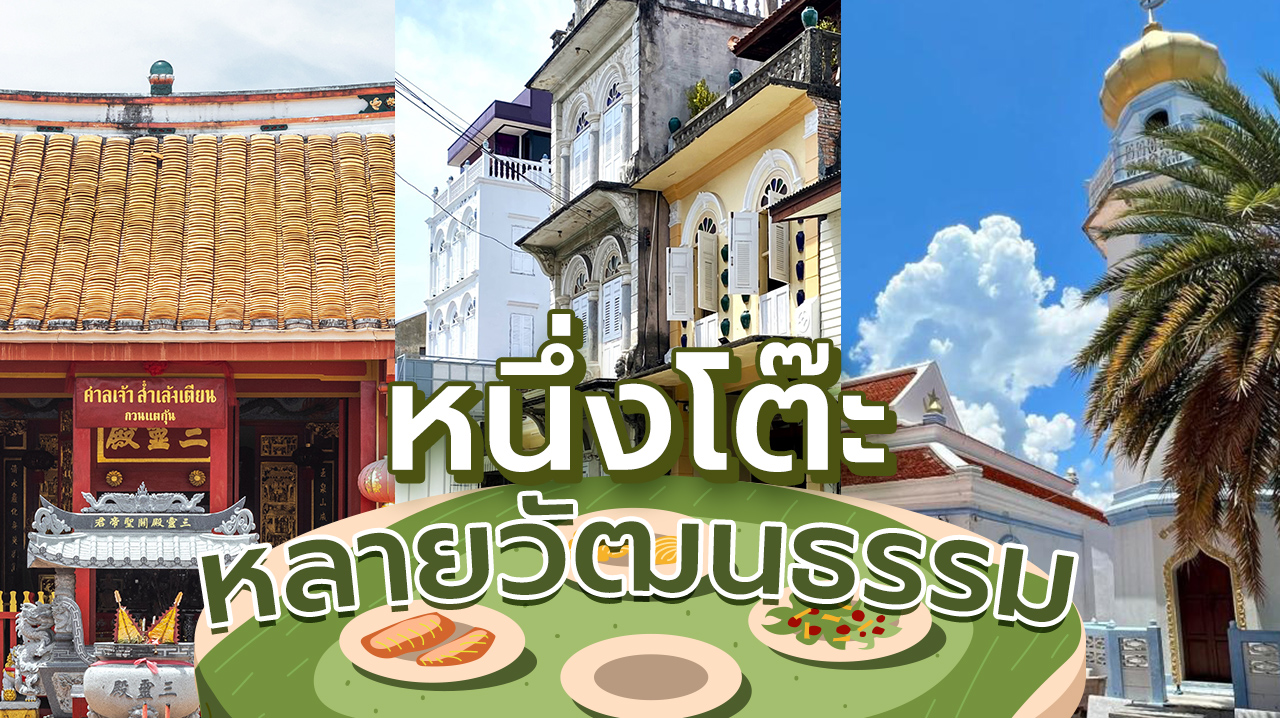
The migration of Chinese communities, particularly those with ties to southern China, together with Thai communities and Muslim communities connected to the Malay-Javanese world, meant that this city was never just a “port” in the economic sense. It was a meeting ground for people, beliefs, languages, and ways of life, traces of which can still be seen today in the city’s layout, architecture, and community life.
When the Harbor Became a Shared Kitchen
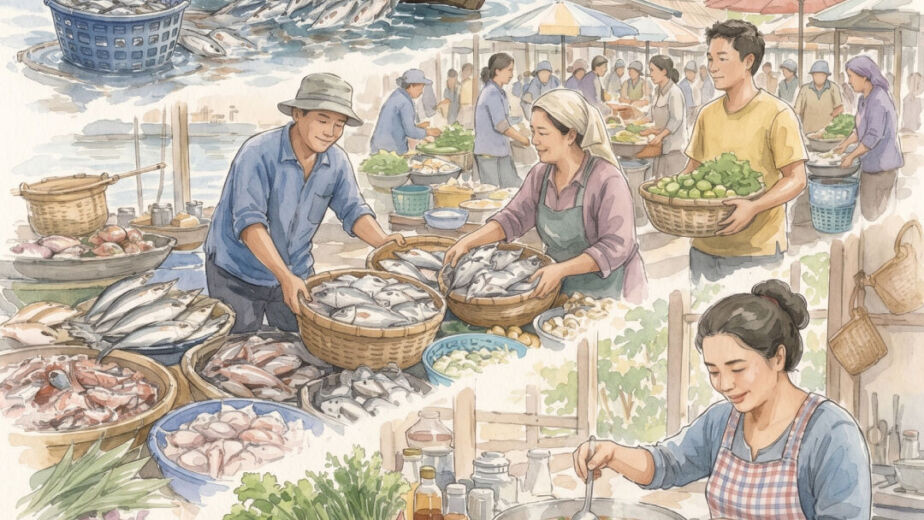
What traveled through the harbor was never just goods. It included tastes, cooking methods, and food knowledge as well. Trade routes across the peninsula brought spices such as ginger, galangal, turmeric, pepper, cloves, and cinnamon, along with ingredients from distant lands, into constant circulation, while rice, agricultural produce, and seafood from the lagoon made their way into the city’s markets and shops. The Nakhon Nok area still bears evidence of old rice mills and waterborne trade, reflecting the close relationship between the old town and the farming and lakeside communities around it.
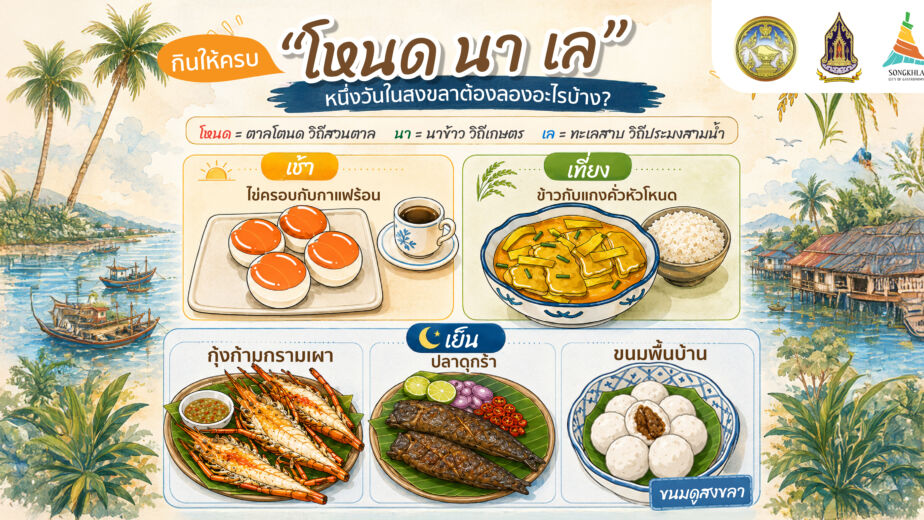
Given this long history of encounter, Songkhla’s food should not be divided too neatly into categories such as “this dish is Thai,” “that one is Chinese,” or “another is Malay-Muslim.” Many flavors here grew out of borrowing, adapting, and eating together, in markets, restaurants, merit-making ceremonies, traditional festivals, and family kitchens alike. Spices, herbs, coconut milk, rice, seafood, budu (a fermented fish sauce distinct to Southern Thailand), and soy sauce, along with methods of fermenting, pickling, salting, drying, stewing, grilling, or simmering broths, take on different forms across the city’s many cultural kitchens. This blending aligns with UNESCO’s own description of Songkhla’s cuisine as shaped by Thai, Chinese, Indian, and Javanese influences, closely tied to the city’s long history as a port town.
Another vital part of this shared table is the “three waters” of the Songkhla Lake system. Fresh water flowing down from rivers into the lagoon meets seawater rising and falling with the tides of the Gulf of Thailand, causing salinity levels to shift by location and season, and giving rise to zones of fresh, brackish, and salt water. This diversity sustains fish, shrimp, and many other aquatic species, and has led local communities to develop their own ways of catching, preserving, cooking, and sharing ingredients in step with the rhythms of nature.
A Shared Table for Today’s Creative City
In 2025, Songkhla was officially named a member of the UNESCO Creative Cities Network in the field of Gastronomy. This recognition means that the stories of the port town, the markets, the three waters, and the city’s cultural diversity are no longer just history. They have become an important asset for the city’s future development. UNESCO has outlined goals for Songkhla that include caring for its watershed and agricultural land, promoting local food traditions and products, developing young people and entrepreneurs, and building sustainable food-related partnerships with other cities in the network.
“Many Cultures, One Table,” then, is not simply an image of many dishes sitting side by side. It is a portrait of Songkhla itself: a city where people of different beliefs and different cultural roots once walked through the same harbor, shopped in the same markets, drew ingredients from the same waters, and gradually built a shared flavor into their daily lives. What deserves to be preserved, then, is not just recipes, but also the old markets, family-run restaurants, fishing traditions, food preservation knowledge, merit-making ceremonies, festivals, and the spaces that still bring people together to eat as one. This is what makes it a “living food heritage,” one capable of connecting the old town’s past to the creative city’s future in a real and tangible way.