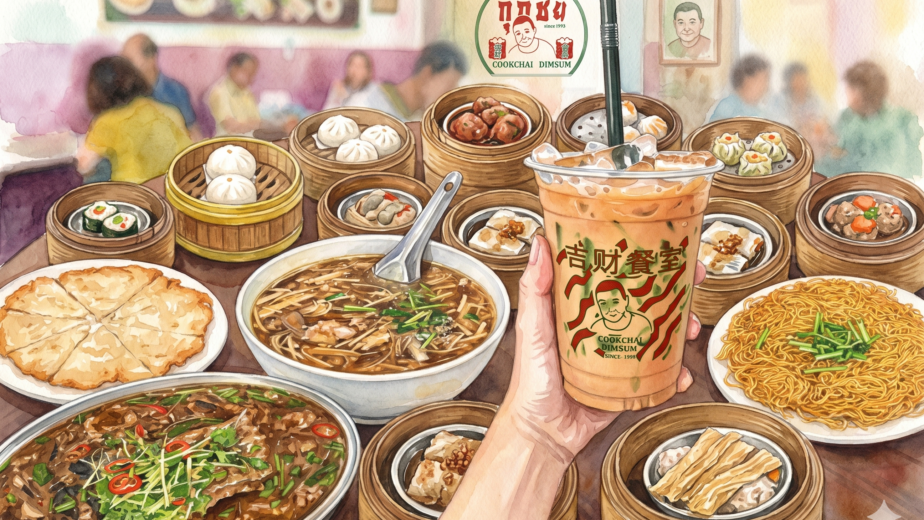
When it comes to iconic breakfast dishes in Songkhla that have been enjoyed by generations of local residents, Kiat Fang Stew Rice is a culinary tradition not to be overlooked. More than simply a satisfying meal, this dish tells the story of cultural exchanges that have shaped the food heritage of one of the Malay Peninsula’s most important historic port cities.
The word stew originates from the Western cooking technique of slowly simmering ingredients to create a rich, flavorful sauce. Over time, this concept was adapted by Chinese immigrant communities and local residents in Songkhla, evolving into a distinctive regional dish that is rarely found elsewhere in Thailand.
The defining characteristic of Kiat Fang Stew Rice is its deep brown gravy, developed through the careful simmering of spices and selected ingredients until a harmonious balance of flavors is achieved. The stew is typically served with pork or pork offal and accompanied by freshly steamed rice. Side condiments such as pickled cucumber, crispy fried shallots, and house-made seasoning sauces are often added, providing additional layers of flavor and texture.
This dish serves as a clear example of Songkhla’s multicultural identity. As a historic center of maritime trade and commerce, the city became a meeting point for people, ingredients, culinary techniques, and traditions from various cultures. The influence of Chinese communities, in particular, played an important role in shaping many of the local dishes that continue to define Songkhla’s food culture today.
Today, Kiat Fang Stew Rice remains a beloved local favorite and a cherished taste of nostalgia for many Songkhla residents. It reflects how cultural diversity can be transformed into a unique culinary identity—one that continues to be preserved and passed down through generations, contributing to Songkhla’s reputation as a city rich in gastronomic heritage.