
Long before buildings everywhere carried the aroma of coffee, before cafés spread to every corner, before the fascination with this dark beverage grew as intense as it is today, and before the Robusta bean took root to become one of the distinctive flavors of Songkhla, coffee already had a long history behind it and had traveled an extraordinarily long way to get here.
The story of coffee’s spread began on the Arabian Peninsula, where it was first consumed among followers of Sufism to ward off drowsiness during nighttime religious rituals. From there, the aroma of coffee spread to every corner of the Arab world as a religious drink, before eventually shifting into a social one. Coffee houses became gathering places for exchanging news and ideas on social, economic, and political matters, marking the beginning of a coffee-drinking culture that would go on to spread across the Western world. European nations then drove a major transformation, becoming the key force that carried this beloved beverage across the ocean to other parts of the globe, marking the first chapter of coffee’s expansion into Southeast Asia under colonial rule.
Coffee had, however, already become known in Siam long before that, arriving as a drink carried in on the winds of trade from the Arab world. It later became one of the country’s important cash crops. Songkhla was among the first cities in southern Thailand to receive coffee seeds, owing to its trade ties with the Malay states, which were producing coffee seriously as an export commodity at the time. Archival records show that Luang Chamnong Niwetkit (Mr. Ramsay) requested land in Songkhla for cultivation between R.S. 112 and 114 (1893 to 1895), a joint venture between Phraya Wichiankhiri (Chom) and a foreign partner who established a coffee plantation in 1894 to 1895 in the area of Phatong Subdistrict, part of what is now Hat Yai District. About ten years later, the Robusta variety made its first appearance in the recorded history of Songkhla. A 1955 survey by the Ministry of Agriculture noted that a Muslim resident had brought Robusta coffee seeds to plant in Ban Nod Subdistrict, Saba Yoi District, Songkhla Province, around 1904. This coincided with the period when Robusta began appearing in the world market as a rival to Arabica, spreading widely and being actively promoted for cultivation in both Indonesia and India. This tree is now believed to be the first Robusta coffee plant in Thailand, before the variety later spread to other provinces across the South.
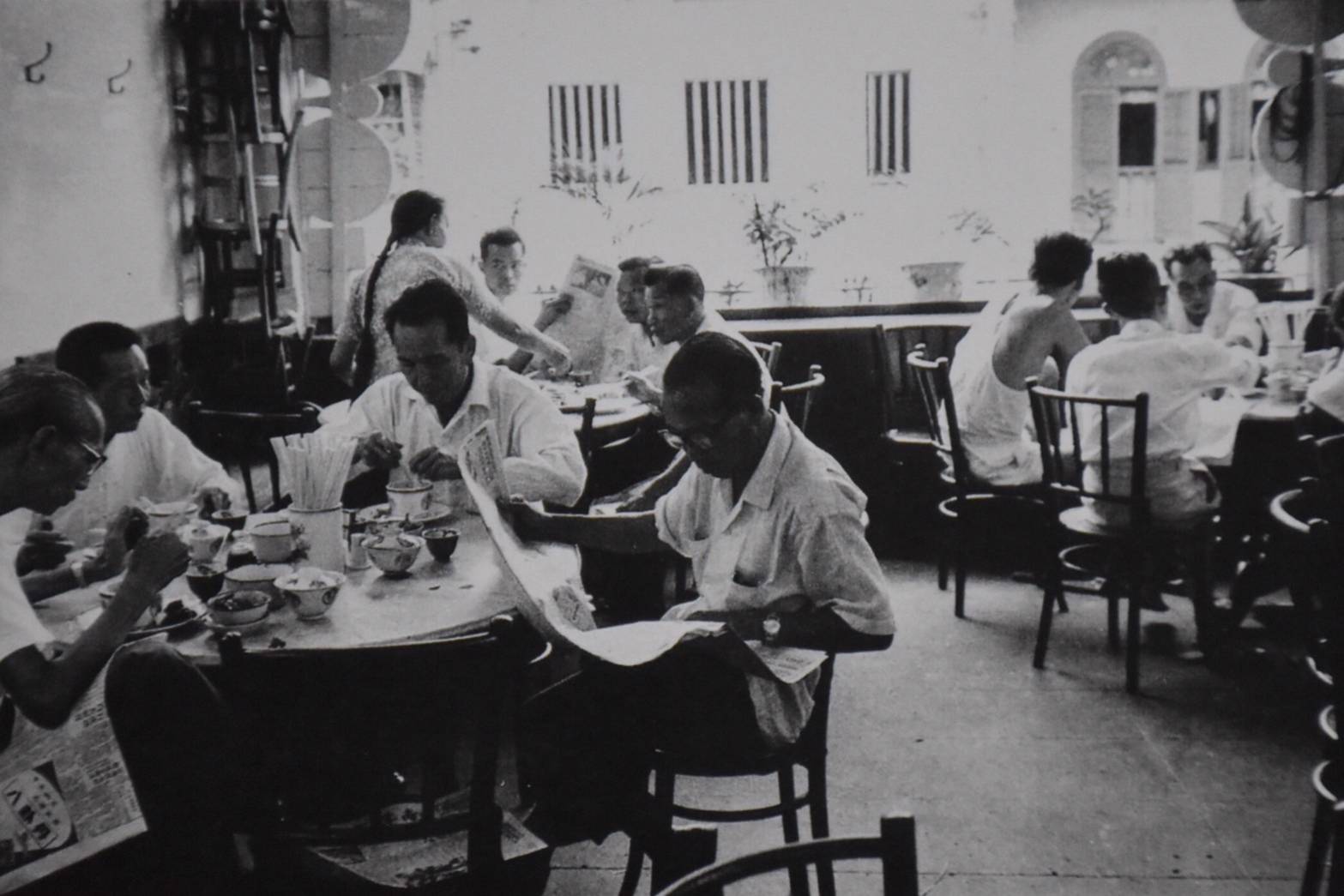
It remains unclear exactly when the culture of coffee drinking began in Songkhla. The earliest coffee shops, however, likely took the form of “kopitiam,” traditional coffee houses run by Chinese immigrants, a style commonly found across the Malay Peninsula. Some of these historic shops, over 90 years old, still stand today on Nang Ngam Road, including Hap Seng, Nam Lee, and Fu Chao. Coffee beans during this early period were imported mainly from Indonesia, Malaysia, and Singapore. Today, coffee shops cluster densely along Nakhon Nok, Nakhon Nai, and Nang Ngam roads, the very streets where coffee’s long journey from Arabia to Songkhla has become plainly evident.
By Theeranart Meenoon, Curator


