To truly understand the flavours of Songkhla, one must begin not at the dining table, but with the waters that have sustained this region for generations.
Songkhla is blessed with a unique geographical setting. Home to both Songkhla Lake and the Gulf of Thailand, the province possesses an extraordinary ecosystem where freshwater, brackish water, and seawater coexist. Locally, this phenomenon is known as the “Three Waters” system.
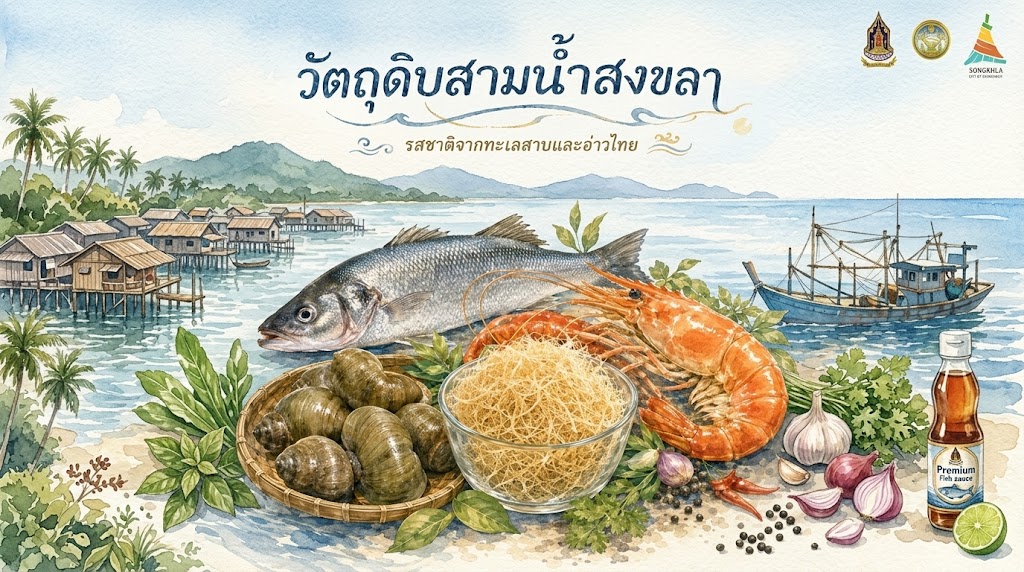
More than a geographical term, the Three Waters ecosystem is the foundation of many of Songkhla’s most distinctive ingredients. From Songkhla Lake sea bass and giant freshwater prawns to local fish species, three-waters oysters, and sea grapes, these ingredients are products of the dynamic relationship between water, seasons, communities, and generations of local wisdom.
What Is the Three Waters Ecosystem?
The term Three Waters refers to an environment influenced by freshwater, brackish water, and seawater within a single interconnected system.
Freshwater flows from rivers, canals, and upstream catchments, while seawater enters from the Gulf of Thailand. Where these waters meet, brackish conditions emerge, creating a highly diverse ecological environment.
As salinity levels shift throughout the year, aquatic species must continuously adapt to changing conditions. This natural process contributes to unique characteristics in many local ingredients, including firmer textures, reduced muddy flavours, and enhanced natural sweetness.
For this reason, ingredients harvested from Songkhla Lake and its surrounding waters are often regarded as true expressions of place rather than ordinary seafood products.
Within the framework of Songkhla Gastronomy, the Three Waters ecosystem serves as a powerful narrative that explains why the province’s ingredients possess such distinctive qualities and why local cuisine remains inseparable from its natural landscape.
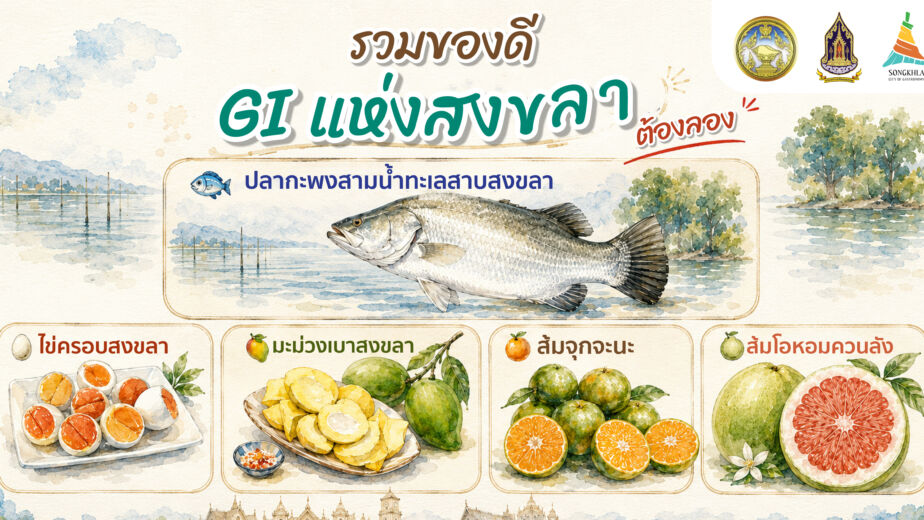
Songkhla Lake Sea Bass: A Symbol of Aquatic Abundance
Few ingredients represent the Three Waters ecosystem as clearly as Songkhla Lake Sea Bass.
Raised in and around Koh Yor and communities surrounding the lake, this prized fish is renowned for its firm texture, naturally sweet flavour, and minimal muddy taste. These qualities are direct results of the diverse water conditions that characterise the lake system.
Sea bass plays a significant role not only in Songkhla’s cuisine but also in the livelihoods of local communities. Fish farming in floating cages, traditional fishing practices, local markets, and culinary traditions all contribute to the fish’s cultural and economic importance.
When discussing Songkhla Lake Sea Bass, we are therefore talking about much more than a single species. We are talking about an ecosystem that supports communities while producing flavours deeply rooted in place.
Giant Freshwater Prawns and Kong Thiao Fish: Stories from the Lakeside Communities
Another important ingredient of the Three Waters ecosystem is the Songkhla Lake Giant Freshwater Prawn.
Thriving in nutrient-rich waters with ideal environmental conditions, these prawns are known for their firm texture, natural sweetness, and popularity in local markets and home kitchens alike.
Equally fascinating is the Kong Thiao Fish, a local species associated with Khuan Niang District. While less widely known than sea bass or giant freshwater prawns, it holds significant value within the culinary traditions of lakeside communities.
Dishes prepared from local fish species such as Kong Thiao often reflect generations of knowledge regarding seasonal cycles, fishing grounds, and cooking methods suited to Songkhla’s distinctive palate.
Together, these ingredients demonstrate that Songkhla’s gastronomy is not defined by a handful of famous products alone, but by the remarkable diversity of resources that local communities have learned to understand, utilise, and celebrate through everyday food culture.
Three-Waters Oysters and Sea Grapes: Flavours from the Meeting Point of Lake and Sea
Moving closer to the Gulf of Thailand, ingredients such as Three-Waters Oysters from Thepha District offer another example of how aquatic environments shape flavour.
These oysters develop in waters influenced by varying levels of salinity, currents, and naturally occurring nutrients. The result is a product with a distinctive taste profile that reflects its unique environment.
Another remarkable ingredient is Sea Grapes (Phom Nang Seaweed), which illustrates the close relationship between local communities and aquatic ecosystems.
Sea grapes demonstrate that Songkhla’s waters provide more than fish, prawns, and shellfish. They also support edible aquatic plants that enrich local cuisine and contribute to the diversity of regional food traditions.
Together, these ingredients broaden the understanding of the Three Waters concept, revealing how ecosystems create not only major food resources but also highly localised ingredients with stories of their own.
The Role of Three-Waters Ingredients in Songkhla Gastronomy
Three-Waters ingredients form one of the key foundations of Songkhla’s gastronomic identity.
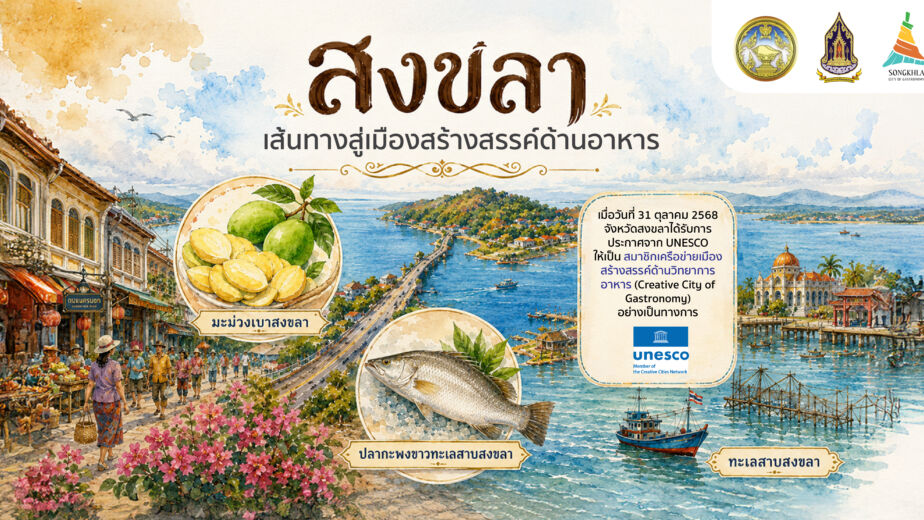
From an environmental perspective, they emerge from a rare and highly diverse ecosystem. From a cultural perspective, they are deeply connected to fishing communities, local markets, family kitchens, and traditional recipes. From an economic perspective, they support local businesses, culinary tourism, food products, and the broader vision of Songkhla as a Creative City of Gastronomy.
Most importantly, these ingredients must be understood within their full context.
They are not simply fresh seafood or local specialities. They are the result of relationships between nature, people, knowledge, and place—relationships that have shaped the flavours of Songkhla for generations.
Conclusion
The Three-Waters ingredients of Songkhla provide one of the clearest expressions of the province’s identity as the land of Two Seas.
From Songkhla Lake Sea Bass and Giant Freshwater Prawns to Kong Thiao Fish, Three-Waters Oysters, and Sea Grapes, each ingredient reflects the connection between Songkhla Lake, the Gulf of Thailand, local communities, and a uniquely diverse ecosystem.
Their significance extends far beyond flavour and quality. They embody traditional fishing practices, sustainable resource use, local knowledge, and generations of coexistence with the water.
These ingredients remind us that Songkhla’s cuisine is not defined solely by recipes, but by landscapes, livelihoods, and the enduring relationship between people and the waters that sustain them.
In every bite, the story of Songkhla’s Three Waters continues to live on.