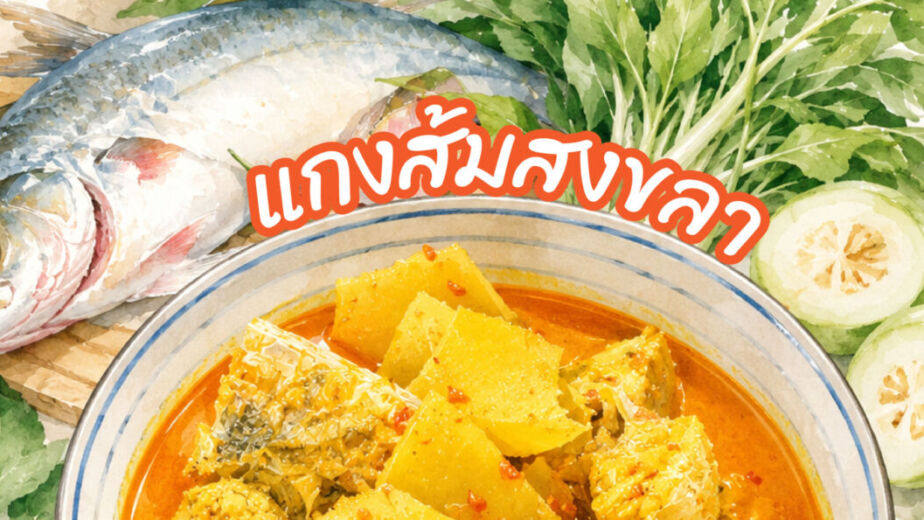
When Food Is More Than Just Flavour
Food is far more than sustenance. It reflects history, culture, ways of life, and the identity of a place and its people.
For Songkhla, a province blessed with rich natural resources and remarkable cultural diversity, food has become a powerful driver of urban development. This vision was internationally recognised when Songkhla was designated as a member of the UNESCO Creative Cities Network (UCCN) in the field of Gastronomy on 31 October 2025.
This achievement represents more than global recognition. It marks the beginning of a new chapter in which Songkhla leverages its culinary heritage as a catalyst for sustainable economic, social, and environmental development.
Songkhla: The Land of Two Seas and Three Waters
One of Songkhla’s greatest strengths lies in its distinctive food ecosystem.
Often referred to as the land of “Two Seas, Three Waters,” Songkhla is uniquely positioned between Songkhla Lake and the Gulf of Thailand. The interaction of freshwater, brackish water, and seawater has created an extraordinary ecological landscape that supports diverse aquatic resources and agricultural products rarely found elsewhere.
This abundance has given rise to many renowned local ingredients, including:
- Songkhla Three-Waters Sea Bass
- Bao Mango
- Khai Khrop (Steamed Salted Egg Yolk)
- Khuan Lang Pomelo
- Chana Som Chuk Orange
Many of these products have received Geographical Indication (GI) certification, highlighting their strong connection to place, tradition, and quality.
These ingredients are not only the foundation of local cuisine but also valuable cultural assets that contribute to the province’s creative economy and gastronomic tourism potential.
A Culinary Heritage Shaped by Cultural Exchange
With a trading history spanning more than a thousand years, Songkhla has long served as a meeting point for diverse communities, including Thai, Chinese, and Malay peoples.
This cultural exchange is reflected in the province’s culinary traditions, where flavours, cooking techniques, ingredients, and food stories have evolved through generations.
Food in Songkhla is therefore more than an intangible cultural heritage. It represents the enduring relationship between people, communities, and the natural environment that sustains them.
Songkhla Gastronomy for Health and Wellbeing
At the heart of Songkhla’s development strategy is a shared vision:
“Songkhla Gastronomy for Health and Wellbeing.”
This vision promotes the responsible use of food resources while preserving local wisdom, creating added value from culinary heritage, and enhancing the quality of life for residents.
The goal is to position Songkhla as a centre for Health and Wellness, where food, culture, innovation, and sustainability work together to create balanced economic, social, and environmental development.
From Local Identity to a Global Network
Membership in the UNESCO Creative Cities Network provides Songkhla with opportunities to collaborate with creative cities around the world.
To support this mission, Songkhla has launched a variety of initiatives, including:
- The development of 80 signature dishes representing all 16 districts of the province
- The annual Songkhla Gastronomy City Festival
- Gastronomy tourism route development
- The Songkhla Culinary Heritage Project
- Programmes to nurture food culture designers and gastronomy ambassadors
- Collaborative partnerships with creative cities in Thailand and internationally
Songkhla has also actively participated in international gastronomy conferences and cultural exchange programmes, strengthening global partnerships and sharing knowledge with creative cities across the world.
Gastronomy as a Tool for Sustainable Urban Development
Songkhla’s vision as a Creative City of Gastronomy extends beyond tourism promotion.
The province focuses on strengthening the entire food value chain—from farmers and fishers to food entrepreneurs, local communities, educational institutions, businesses, and government agencies.
By fostering collaboration across sectors, Songkhla is building a more sustainable food system that:
- Generates income for local communities
- Encourages responsible resource management
- Supports biodiversity conservation
- Creates opportunities for younger generations to build careers rooted in local culture and innovation
This holistic approach ensures that gastronomy contributes not only to economic growth but also to social inclusion and environmental stewardship.
The Next Chapter for Songkhla
Today, the Songkhla Lake Basin and its surrounding communities have been included on Thailand’s Tentative List for future UNESCO World Heritage consideration.
At the same time, Songkhla’s designation as a UNESCO Creative City of Gastronomy demonstrates the province’s ability to use cultural heritage and food resources as powerful tools for sustainable development.
Songkhla is proving that food is not merely about taste. It is a means of connecting people, generating economic opportunities, preserving cultural heritage, and inspiring future generations.
Conclusion
Songkhla’s designation as a UNESCO Creative City of Gastronomy in 2025 marks a significant milestone in the province’s journey onto the global stage.
With its unique ecosystem of “Two Seas, Three Waters,” rich multicultural heritage, distinctive local ingredients, and commitment to health and wellbeing, Songkhla is emerging as a model for how gastronomy can drive sustainable urban development.
More than a destination for food lovers, Songkhla is becoming a place of learning, inspiration, and innovation—demonstrating how culinary culture can shape the future of cities around the world.