
Geographical Indication

Products whose quality, flavour, and character are inseparable from the land, water, and traditions of Songkhla Province.
A Geographical Indication (GI) is a distinctive sign used to identify a product whose quality, reputation, or other characteristics relate directly to its geographical origin.
Thailand’s Department of Intellectual Property registers GI products under the Geographical Indications Protection Act. GI status protects these products from imitation and helps consumers identify authentic, origin-certified goods. Songkhla Province currently holds four registered GI products — each an expression of the region’s unique ecology, cultural heritage, and artisanal knowledge.
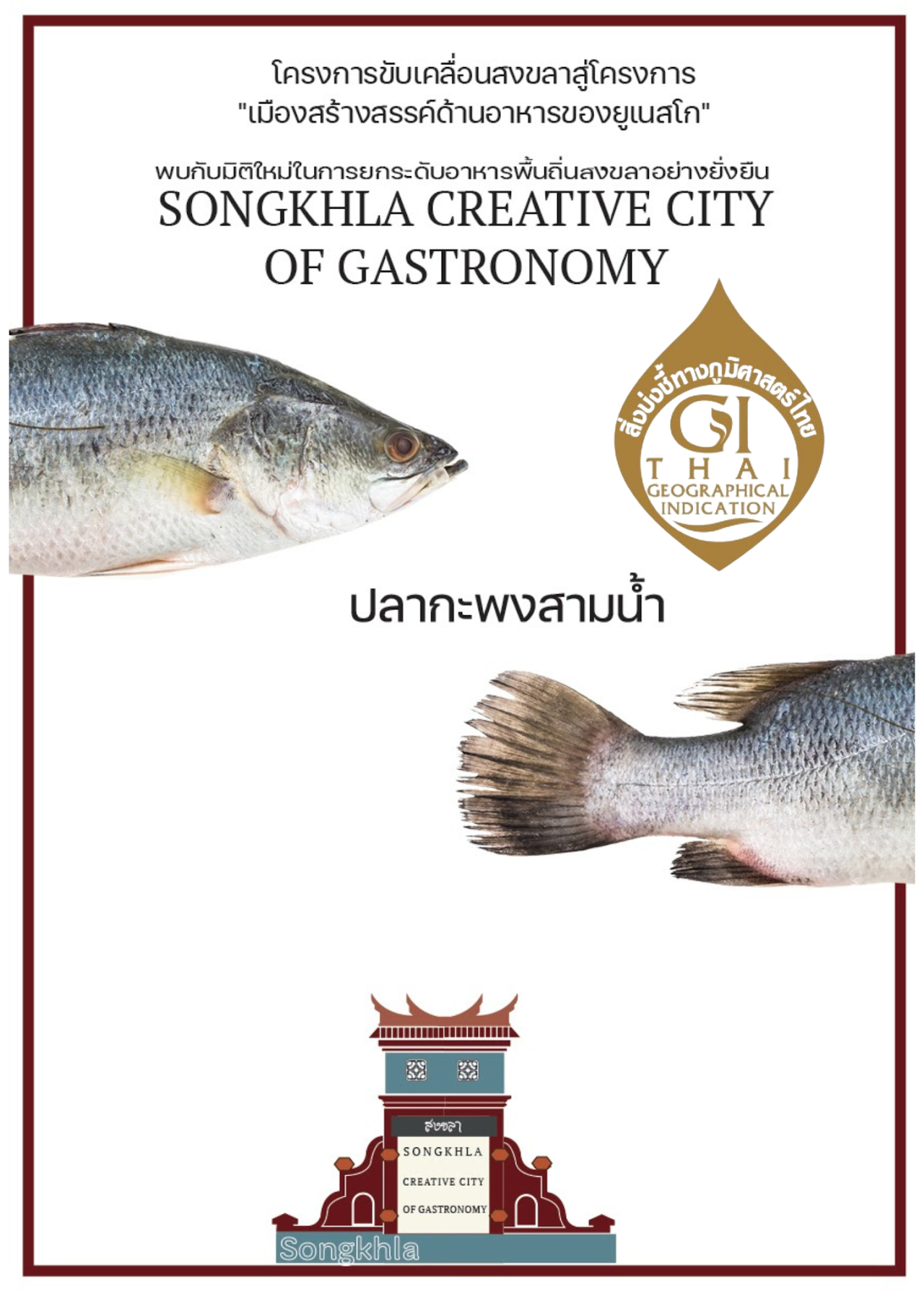
Songkhla Lake Seabass
Mueang Songkhla, Singhanakhon, Hat Yai, Bang Klam & Khuan Niang Districts
Seabass raised in cage farms at Songkhla Lake’s lagoon mouth extending to Pak Roar. Fish must weigh at least 2 kg and be cage-raised for a minimum of one year in the lake’s brackish waters. Certified products are sold fresh, frozen, salted, or as crispy fried seabass skin; all processing takes place within Songkhla Province.
Distinctions
Soft, creamy flesh with an exceptionally clean taste — no muddy or musty smell — owing to the lake’s unique brackish-water environment.
Remarkable culinary versatility: suited for boiling, stewing, frying, stir-frying, grilling, smoking, currying, and even incorporation into cakes and cookies.
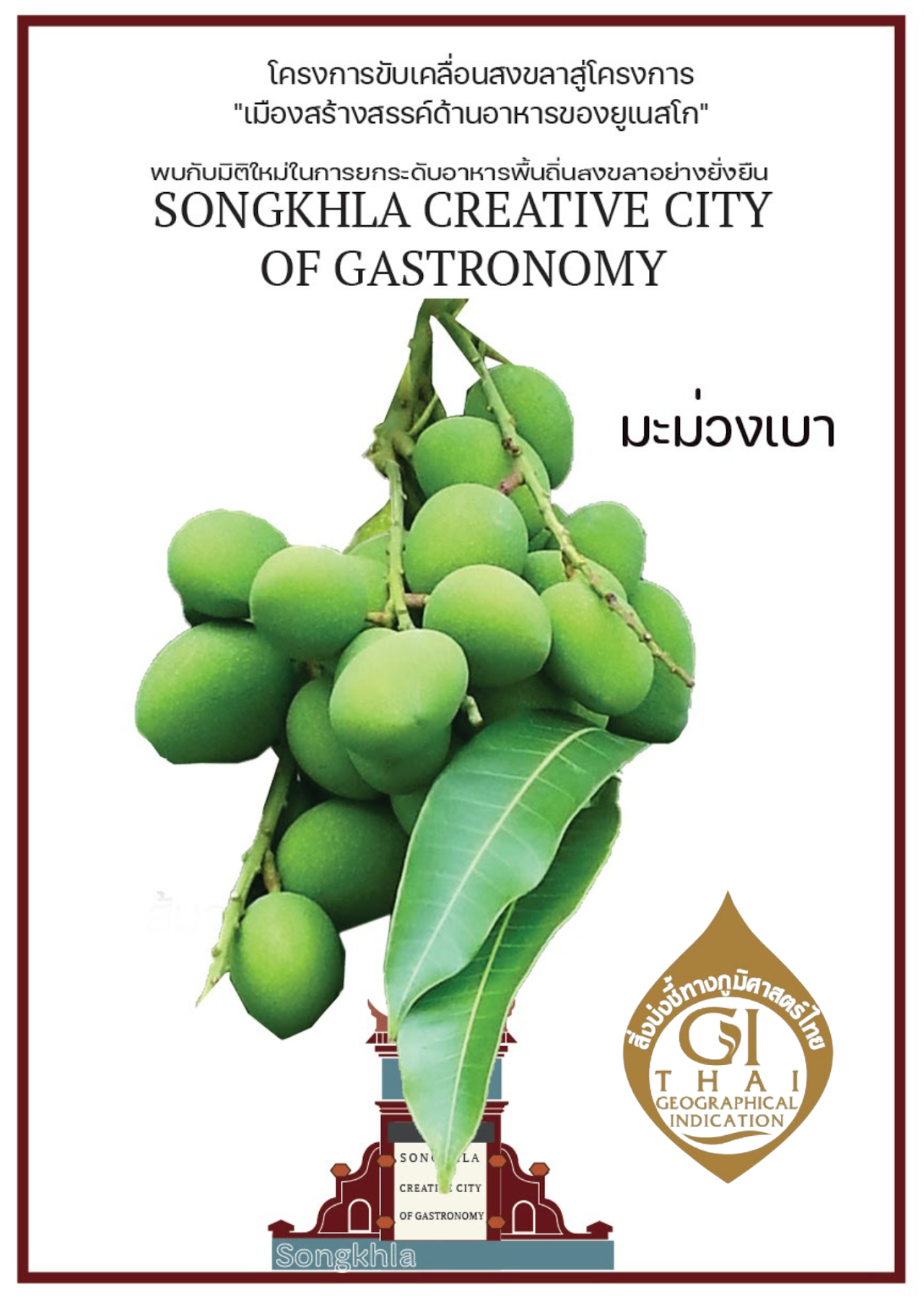
Songkhla Mini Mango
Sathing Phra Peninsula — Singhanakhon, Sathing Phra, Krasae Sin & Ranot Districts
A small, treasured mango variety cultivated exclusively on the Sathing Phra Peninsula — a narrow strip of land flanked by Songkhla Lake and the Gulf of Thailand. The microclimate and sandy soils of the peninsula give this mango its distinctive character. Processing into all registered forms may be carried out anywhere in Songkhla Province.
Distinctions
Small, oval fruit with a short stalk and thin light-green peel. The flesh is white, firm, and crisp with a strong aroma, clear sap, and a refreshing sour flavour.
Excellent eaten fresh; also processed into preserved fruit in heavy syrup, salt-pickled, ice cream, drinks, and traditional chili paste.
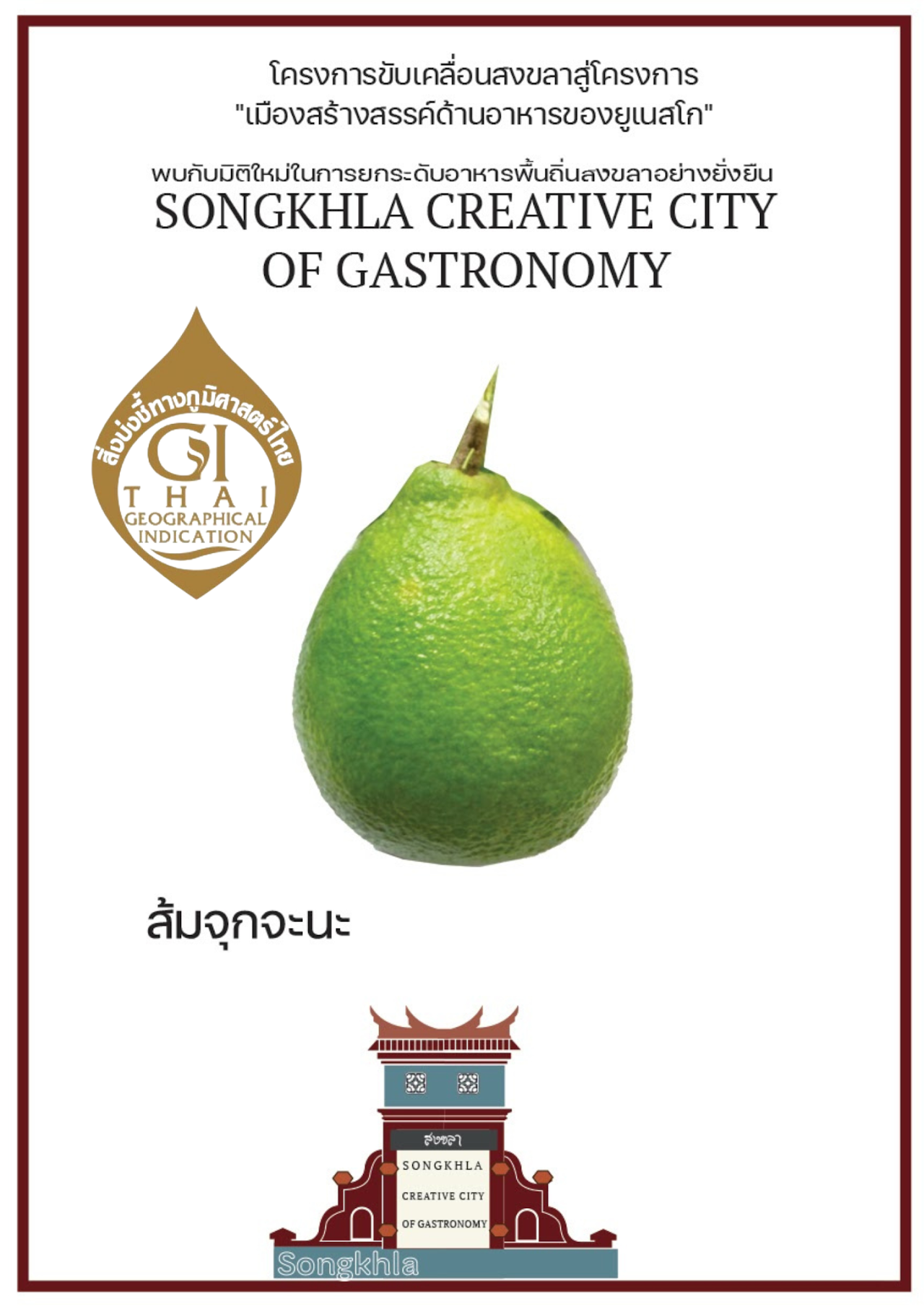
Chana Neck Orange
Chana District, Songkhla Province
Named for its distinctive crown-like navel tip, the Chana Neck Orange (ส้มจุก) is an heirloom citrus variety grown in the fertile soils of Chana District in southeastern Songkhla. This rare fruit has been cultivated by local farmers for generations and now commands premium prices — up to 200 THB per kilogram at the farm gate — following its GI certification.
Distinctions
Two varieties: thick-peel (rough, glossy skin) and thin-peel. Unripe fruit is deep green; ripe fruit turns greenish-yellow or greenish-orange.
Fragrant, oil-rich peel with an intense floral aroma. The juicy, tender flesh delivers a harmonious sweet-sour flavour unique to the local microclimate.
Prized in domestic markets and increasingly exported — notably to Japan — as a premium, origin-certified citrus fruit.
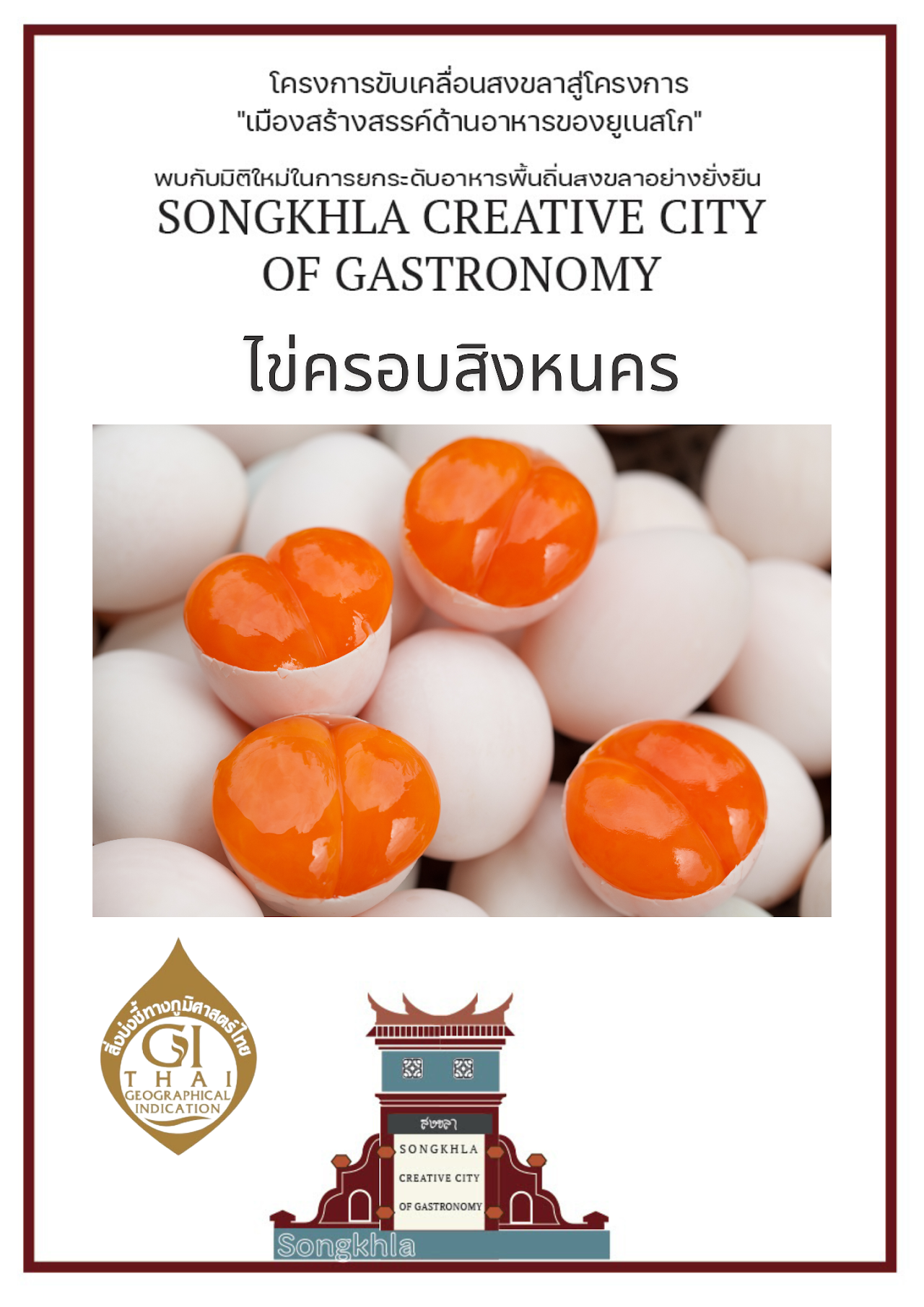
Songkhla Steamed Egg Yolks
Sathing Phra, Krasae Sin, Ranot & Singhanakhon Districts
A century-old local delicacy originating from the fishing communities of the Sathing Phra Peninsula. Khai Khrop (“covered egg”) is made by placing two duck egg yolks inside a single trimmed eggshell, which is then sealed and steamed. This preservation method was developed by fishermen who needed a shelf-stable, nutrient-dense food — and has been passed down through more than four generations of local families.
Distinctions
Vivid reddish-orange exterior with a glossy surface. Three distinct textural zones: a molten lava-like core, a firm rubber-like middle layer, and the outer original texture.
Mildly sweet with a pleasant hint of saltiness and absolutely no fishy odour — a mark of premium duck eggs and traditional steaming technique.
A living piece of intangible culinary heritage, now protected as GI to safeguard producer livelihoods and this irreplaceable community tradition.
Certified by Thailand’s Department of Intellectual Property
All products listed here carry official GI status under Thailand’s Geographical Indications Protection Act, ensuring authenticity and protecting the heritage of Songkhla’s producers.