When discussing native plants that are deeply intertwined with the way of life in Southern Thailand, the Palmyra Palm stands out as one of the most significant natural resources. In Songkhla and the Songkhla Lake Basin, this tree is far more than an economic crop—it is an essential part of local culture, cuisine, and traditional knowledge.
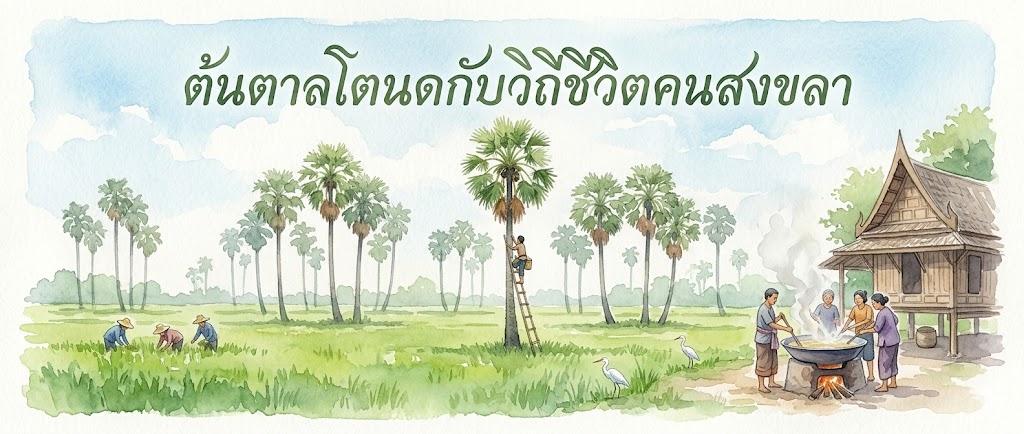
The Palmyra Palm thrives in the region’s tropical climate and fertile soils. With its tall trunk and wide-spreading fronds, it is a defining feature of the Southern landscape. Almost every part of the tree can be utilized, from the sap extracted from its flower stalks to its young fruit, as well as its leaves and stems, which are used in weaving and various community crafts.
At the heart of its importance in Songkhla’s way of life is palm sugar, a natural sweetener derived from the sap of the palm flower. The sap is carefully boiled down until it becomes a dark, aromatic sugar with a deep, complex sweetness unlike refined sugar. Palm sugar is widely used in traditional cooking, from savory dishes to desserts and household condiments.
In culinary traditions, the Palmyra Palm plays a vital role in many Southern Thai sweets such as kanom jak, kanom tan, and other local desserts that combine palm fruit or coconut milk with palm sugar. These creations reflect the simplicity yet richness of local culinary wisdom, where natural ingredients are transformed into distinctive flavors rooted in place and tradition.
Beyond its role in food, the Palmyra Palm also represents a way of life grounded in harmony with nature. Harvesting palm sap requires skill, patience, and a deep understanding of seasonal cycles—knowledge that has been passed down through generations within local communities.
For communities around the Songkhla Lake Basin, the Palmyra Palm is not merely a crop but part of a cultural landscape that connects people to nature. It embodies the close relationship between humans and their environment, reflecting a long-standing balance between livelihood and ecological awareness.
Today, even as lifestyles continue to change, the flavor of palm sugar remains present in local cuisine. It continues to symbolize Songkhla’s identity—where nature, wisdom, and culture blend seamlessly into everyday life.
In every drop of palm sugar sweetness, there is more than just flavor. There is a living story of people, land, and tradition that continues to thrive through time.