Where the Aroma of Charcoal Still Defines the Taste
In the historic city of Songkhla, where traditions continue to shape everyday life, one humble curry shop has preserved the authentic art of Southern Thai cooking for more than half a century. Known locally as Pa Nongyao’s Charcoal-Fired Curry House, this beloved eatery on Saiburi Road remains one of the few places where every dish is still prepared over traditional charcoal stoves.
What makes the restaurant remarkable is not only its rich flavors but also its unwavering commitment to a cooking method that has largely disappeared from modern kitchens.
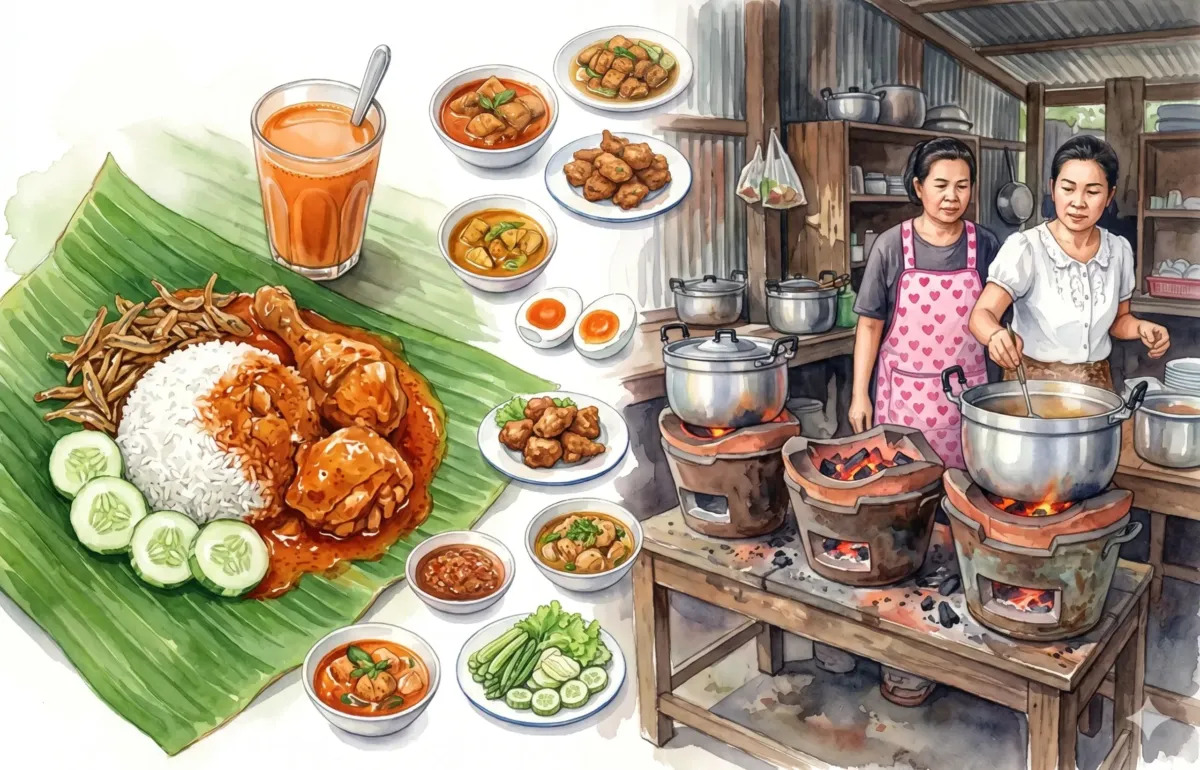
While gas and electric stoves have become the norm, Pa Nongyao continues to rely on charcoal fire, a technique that requires patience, skill, and careful heat control. The gentle, steady heat allows curry pastes, herbs, and spices to slowly infuse into the ingredients, creating layers of flavor that are deep, balanced, and unmistakably traditional.
The subtle aroma of charcoal smoke that lingers in every pot is more than a cooking by-product; it is a sensory reminder of Songkhla’s culinary heritage and the wisdom passed down through generations.
Charcoal Cooking and Southern Thai Culinary Wisdom
Southern Thai cuisine is renowned for its bold curry pastes and aromatic spices. Cooking over charcoal enables ingredients such as turmeric, dried chilies, black pepper, lemongrass, and garlic to release their flavors gradually and fully.
As a result, the curries develop a richness and complexity that cannot be rushed. The heat penetrates slowly, allowing meats to become tender while absorbing the essence of the spices. The flavors remain vibrant and spicy, yet rounded and harmonious.
For many food enthusiasts, this traditional cooking method represents something increasingly rare in modern gastronomy: food prepared with time, craftsmanship, and respect for tradition.
Khao Man Kaeng Kai: The Signature Dish of Songkhla
No visit to Pa Nongyao’s would be complete without trying its signature dish, Khao Man Kaeng Kai, a classic Songkhla breakfast that has been enjoyed by locals for generations.
The rice is cooked with fresh coconut milk until fragrant and delicately rich, producing soft, fluffy grains with a subtle sweetness. It is traditionally served with chicken curry or beef curry simmered over charcoal until the meat becomes exceptionally tender.
The thick, aromatic curry showcases the distinctive character of Southern Thai spice blends, delivering warmth and depth without overwhelming the palate. Many diners complement the dish with tamarind chili paste or a traditional local dipping sauce, adding another dimension of sweet, sour, and savory flavors.
Together, these elements create a dish that reflects the culinary identity of Songkhla in a single plate.
More Than a Curry Shop: A Living Culinary Heritage
Pa Nongyao’s Charcoal-Fired Curry House is more than a local restaurant. It is a living example of Songkhla’s food heritage, preserving traditional techniques that are increasingly difficult to find.
Every morning, charcoal is lit, curries are slowly simmered, and recipes passed down through generations continue to be prepared much as they were decades ago. In an era defined by speed and convenience, the restaurant reminds visitors that some of the most memorable flavors are born from patience and tradition.
For culinary travelers, heritage food enthusiasts, and anyone seeking an authentic taste of Southern Thailand, a meal at Pa Nongyao’s offers more than nourishment. It is an opportunity to experience a piece of Songkhla’s cultural story through food.
Location
Saiburi Road, Mueang Songkhla District, Songkhla Province, Thailand
(Opposite the former Songkhla Provincial Forestry Office)
If you find yourself exploring the City of Two Seas, make time for a stop at this cherished local institution. The aroma of charcoal, the richness of traditional curries, and the warmth of Songkhla hospitality continue to thrive here, just as they have for generations.