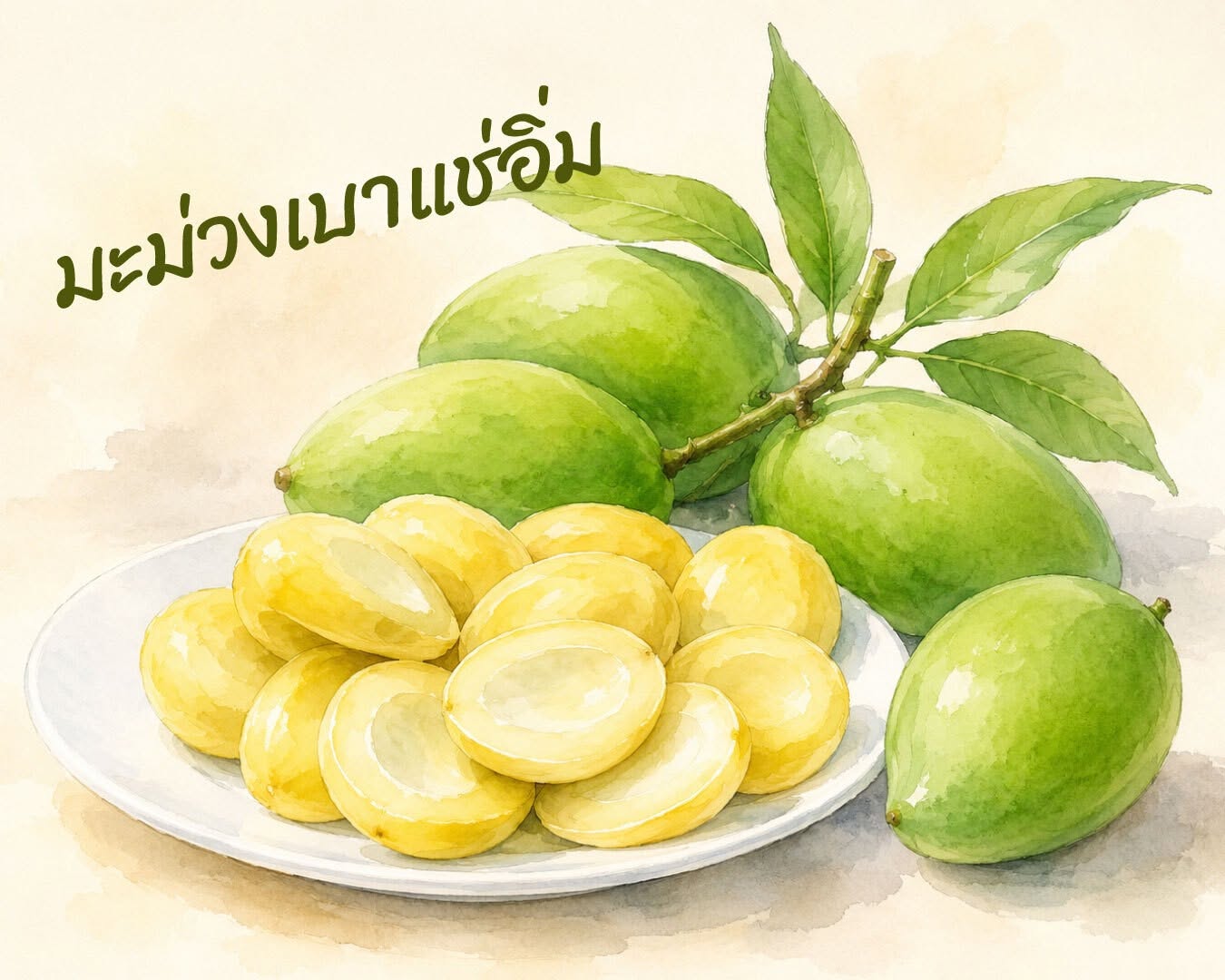
When discussing fruits that best represent the identity of Southern Thailand, Ma Muang Bao (Southern Green Mango) is undoubtedly one of the most distinctive. Renowned for its sharp sourness, crisp texture, and unique aroma, this native mango variety has been an integral part of local food culture for generations.
Ma Muang Bao is a traditional mango cultivar widely found across Southern Thailand, particularly in communities surrounding the Songkhla Lake Basin. The region’s favorable climate, fertile landscapes, and abundant natural resources create ideal conditions for its cultivation. The trees thrive in mixed orchards maintained by local families and typically bear fruit during the early summer months each year.
What sets Ma Muang Bao apart is its refreshingly tart flavor, which distinguishes it from many other mango varieties. It is commonly enjoyed fresh with sweet fish sauce dip, sweet shrimp paste dip, or chili salt. Beyond fresh consumption, the fruit is also preserved through pickling, candying, and other processing methods that help extend its shelf life while adding value to local agricultural products.
Within Southern Thai gastronomy, Ma Muang Bao plays an important role in numerous traditional dishes. It is a key ingredient in spicy mango salads, mango-based chili dips, and is often served alongside seafood dishes, where its bright acidity enhances flavors and adds freshness to the meal.
More than just a sour fruit, Ma Muang Bao reflects the close relationship between people and the landscape of the Songkhla Lake Basin. The fruit is deeply connected to the region’s biodiversity and agricultural wisdom, both of which have been nurtured and passed down through generations of local communities.
Today, Ma Muang Bao is not merely a local fruit; it is a symbol of Songkhla’s culinary heritage. Through its distinctive taste, it tells the story of the region’s natural environment, traditional way of life, and living food culture—one that continues to thrive with every harvest season.