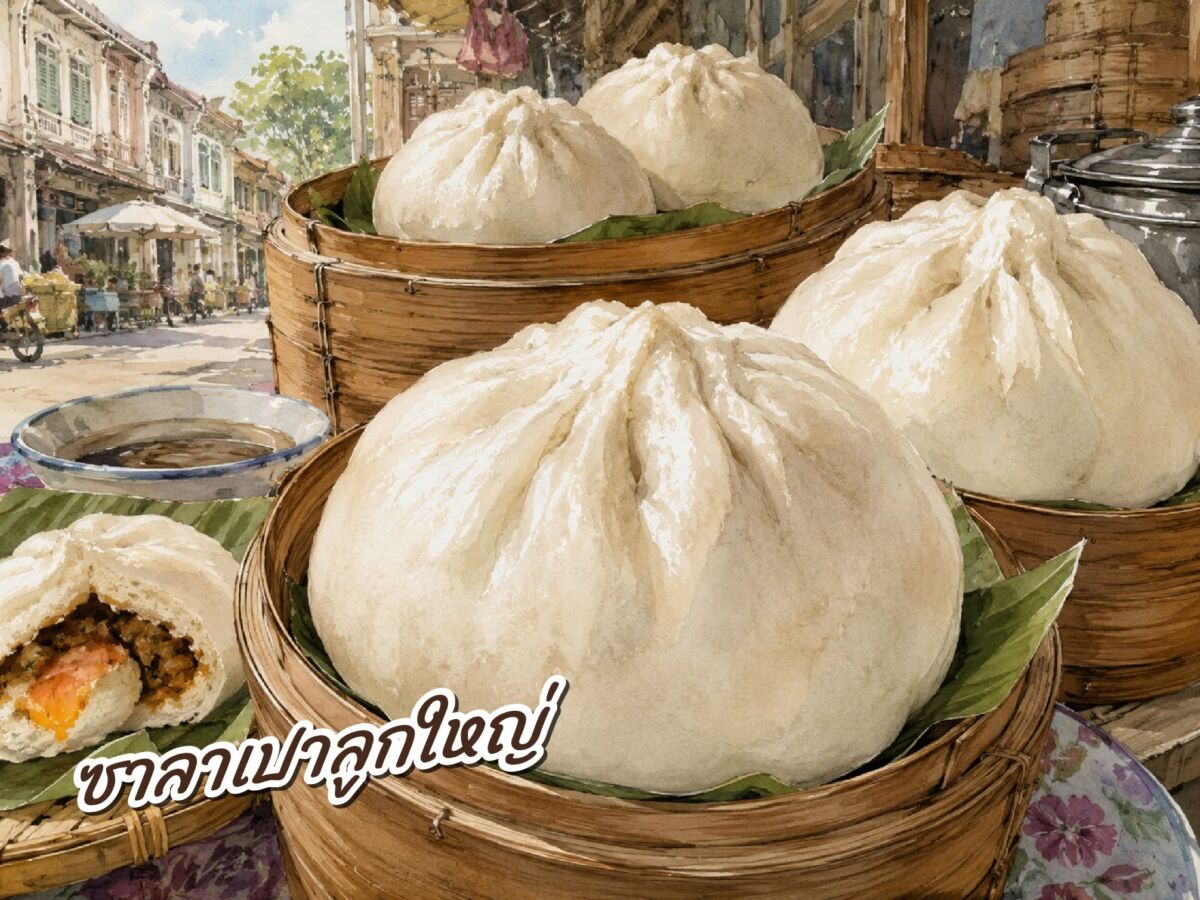
Bao is one of the most recognizable foods reflecting the influence of Chinese communities, whose contributions have played a significant role in shaping the history, economy, and cultural identity of Songkhla. As a historic port city, Songkhla has long served as a crossroads where people, goods, and traditions from diverse cultures came together and flourished.
This beloved food arrived alongside Chinese immigrants who settled and built their lives in Southern Thailand. Originally a staple of everyday Chinese cuisine, bao gradually became woven into the daily lives of local communities in Songkhla, where it has been embraced and passed down through generations.
The defining characteristic of bao is its soft, fluffy white dough, carefully steamed until fragrant and tender, enclosing a flavorful filling within. Traditional fillings include minced pork, red bean paste, and custard cream, while modern variations continue to evolve to meet the changing tastes of consumers.
Historically, bao was particularly well suited to the lifestyle of a bustling port city. Convenient, portable, and nourishing, it provided an ideal meal for workers, traders, and travelers alike. As a result, it became a popular choice for breakfast, a midday snack, or a treat shared among family members and friends.
Although its origins lie in Chinese culinary traditions, bao has become firmly rooted in the cultural landscape of Songkhla. Over time, it has evolved into a local favorite that reflects the city’s multicultural heritage and its long history of migration, settlement, and cultural exchange.
Today, bao remains a cherished food enjoyed by people of all ages. It can still be found in local shops, morning markets, and neighborhoods throughout Songkhla, serving as a reminder that some foods are more than simple meals—they are living cultural heritage preserved through flavors, memories, and everyday traditions.
The simple yet comforting taste of bao does more than satisfy hunger. It tells a story of journeys across seas, the establishment of new communities, and the blending of cultures that helped shape Songkhla into the diverse and vibrant gastronomic destination it is today.