Kanom Pada: A Heritage Muslim Dessert from Songkhla Old Town
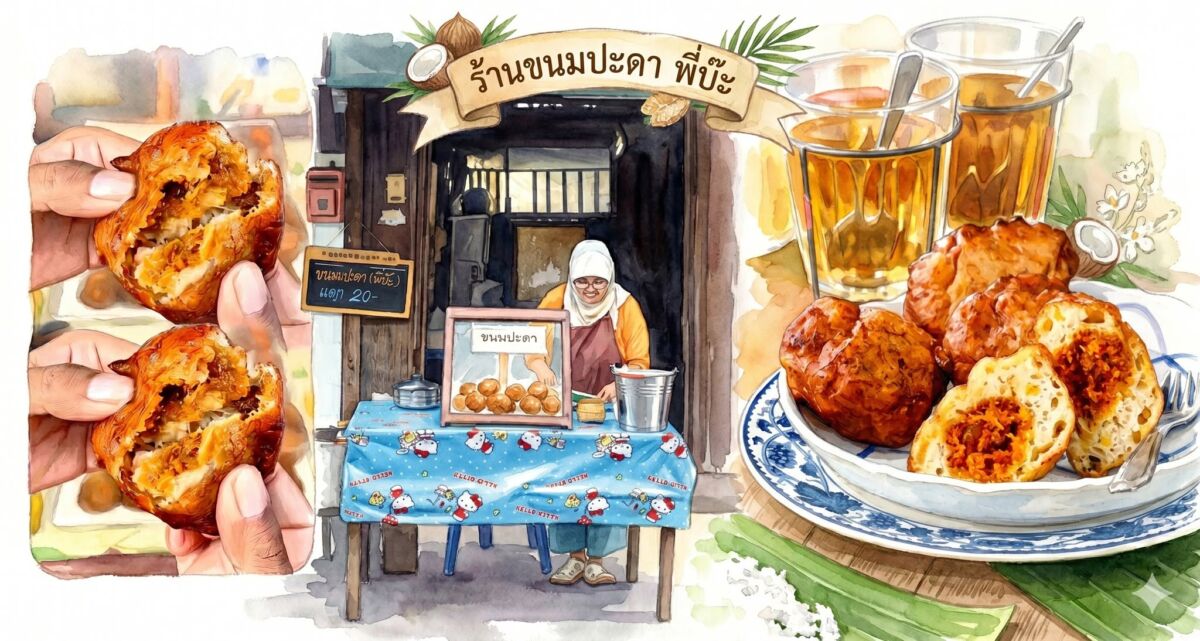
In the historic neighborhood of Songkhla, particularly within the narrow lanes of the Ban Bon Mosque community, lies a rare traditional dessert known as “Kanom Pada.” This Muslim-origin snack has been passed down for more than 50 years and is often described by locals as a “Muslim donut” due to its round shape and deep-fried preparation style. However, its flavor profile is deeply rooted in southern Thai culinary identity rather than Western influence.
Today, the recipe is preserved by a local cook known as P’ Ba, who inherited the traditional method from her mother. This continuity reflects the importance of culinary heritage within the local Muslim community and highlights how food functions as a cultural legacy.
Banana-Infused Dough with Natural Sweetness
The defining feature of Kanom Pada is its dough, made from rice flour combined with ripe Namwa bananas. This combination creates a soft, chewy texture with a naturally mild sweetness and a distinct banana aroma. Unlike modern desserts that rely heavily on refined sugar, Kanom Pada reflects a traditional approach that values natural ingredients and local produce.
When deep-fried, the exterior becomes lightly crisp while the interior remains soft and moist, offering a balanced texture in every bite.
Spicy Southern Thai Shrimp Filling: A Bold Flavor Contrast
What sets Kanom Pada apart from other fried snacks is its savory filling made from stir-fried shrimp, grated coconut, and southern Thai curry paste. The filling delivers a bold, spicy, and aromatic profile characteristic of southern Thai cuisine.
The contrast between the sweet banana dough and the rich, spicy filling creates a complex flavor experience that blends sweet, savory, and spicy elements in a single bite. This fusion challenges the conventional boundary between desserts and savory snacks.
Plain Version: A Simpler Expression of Tradition
In addition to the filled version, Kanom Pada is also available in a plain form. This version highlights the banana-infused dough without any filling, allowing consumers to fully appreciate its natural aroma and texture. It represents the original form of the dessert before modern adaptations were introduced.
A Living Culinary Heritage in a Historic Alley
Beyond its taste, Kanom Pada represents the living culinary heritage of the Muslim community in Songkhla Old Town. It reflects how traditional recipes are preserved within small, tightly knit neighborhoods and passed down through generations. The dessert stands as an example of how food can serve as a cultural identity marker, connecting history, community, and everyday life.
Location
Ban Bon Mosque community, Na Ngang Road, Songkhla Old Town, Songkhla Province, Thailand