Songkhla is a coastal province where warm weather, sea breeze, and local food culture are closely connected. In a place where the sun can be strong throughout the day, refreshing food is more than a preference. It is part of everyday life.
One of the most refreshing local tastes is the sour and crispy bite of Mamuang Bao Songkhla, a small local mango known for its firm texture, bright acidity, and fresh aroma. It is often eaten as a snack or turned into a spicy mango salad that reflects the bold flavors of Southern Thai cuisine.
What Makes Mamuang Bao Special?
Mamuang Bao is usually small in size, but its flavor is full of character. The flesh is crisp, the taste is sharply sour, and the aroma is fresh and slightly fruity. This makes it perfect for hot days, especially when paired with chili, salt, sweet fish sauce, shrimp paste dip, or spicy salad dressing.
For local people, Mamuang Bao is more than a seasonal fruit. It is part of Songkhla’s food identity, connected to local ingredients, home-style cooking, and the habit of enjoying bold, lively flavors.
Yum Mamuang Bao: A Simple Dish with Big Flavor
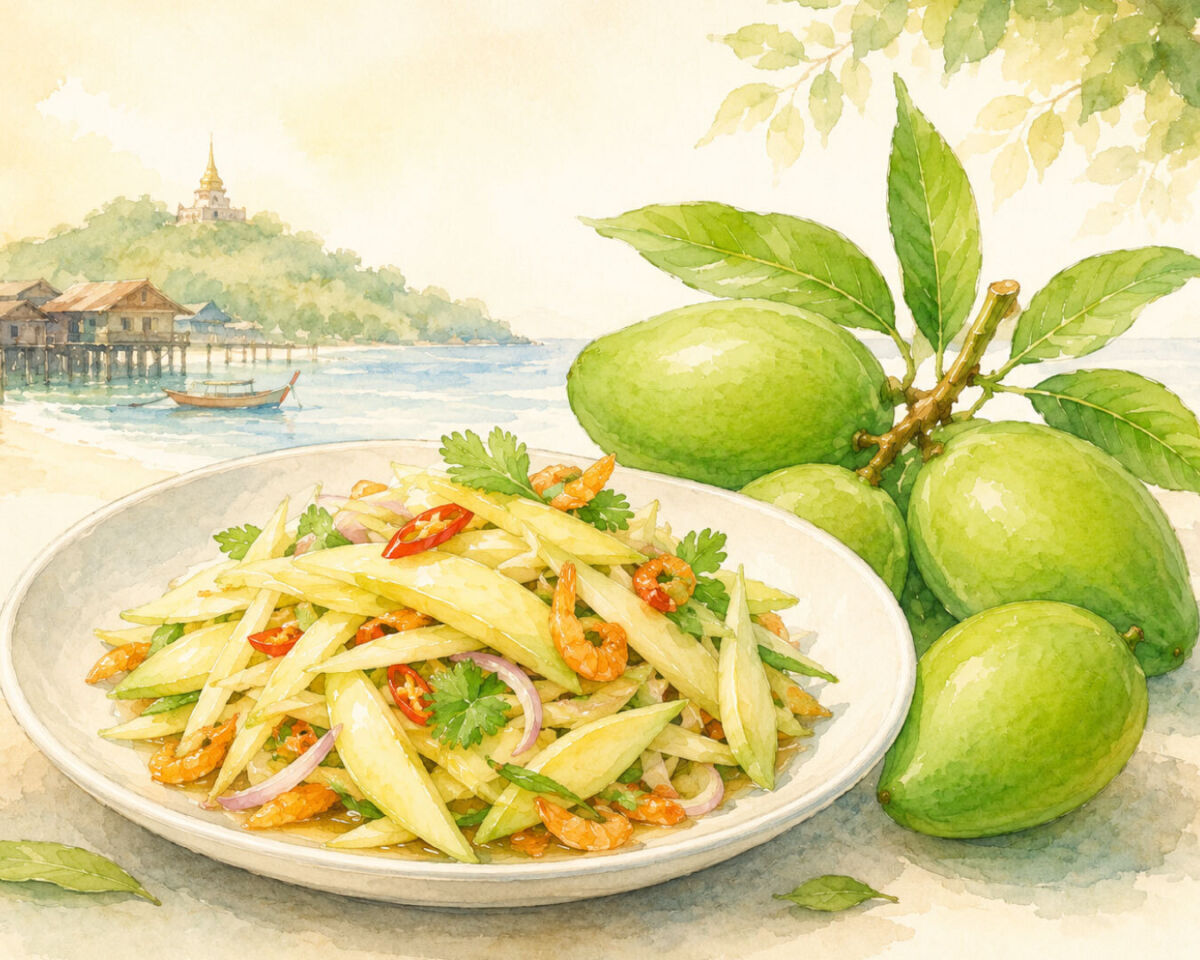
One of the most popular ways to enjoy this mango is Yum Mamuang Bao, or spicy sour mango salad. The dish is simple, but the flavor is exciting. Thinly sliced mango is mixed with chili, fish sauce, lime or local seasoning, shallots, dried shrimp, roasted peanuts, or crispy fish depending on the recipe.
Each bite offers a balance of sourness, saltiness, spiciness, and crunch. It is the kind of dish that wakes up the appetite and brings instant freshness, especially in Songkhla’s warm weather.
A Taste That Tells a Local Story
The sour and crispy taste of Mamuang Bao Songkhla represents the spirit of local food: fresh, bold, and easy to enjoy. It shows how a simple ingredient can carry the story of place, climate, and community.
For visitors who want to understand Songkhla through food, Mamuang Bao is a great starting point. One bite of its refreshing sourness can tell you why this small mango has become one of the province’s most memorable local flavors.